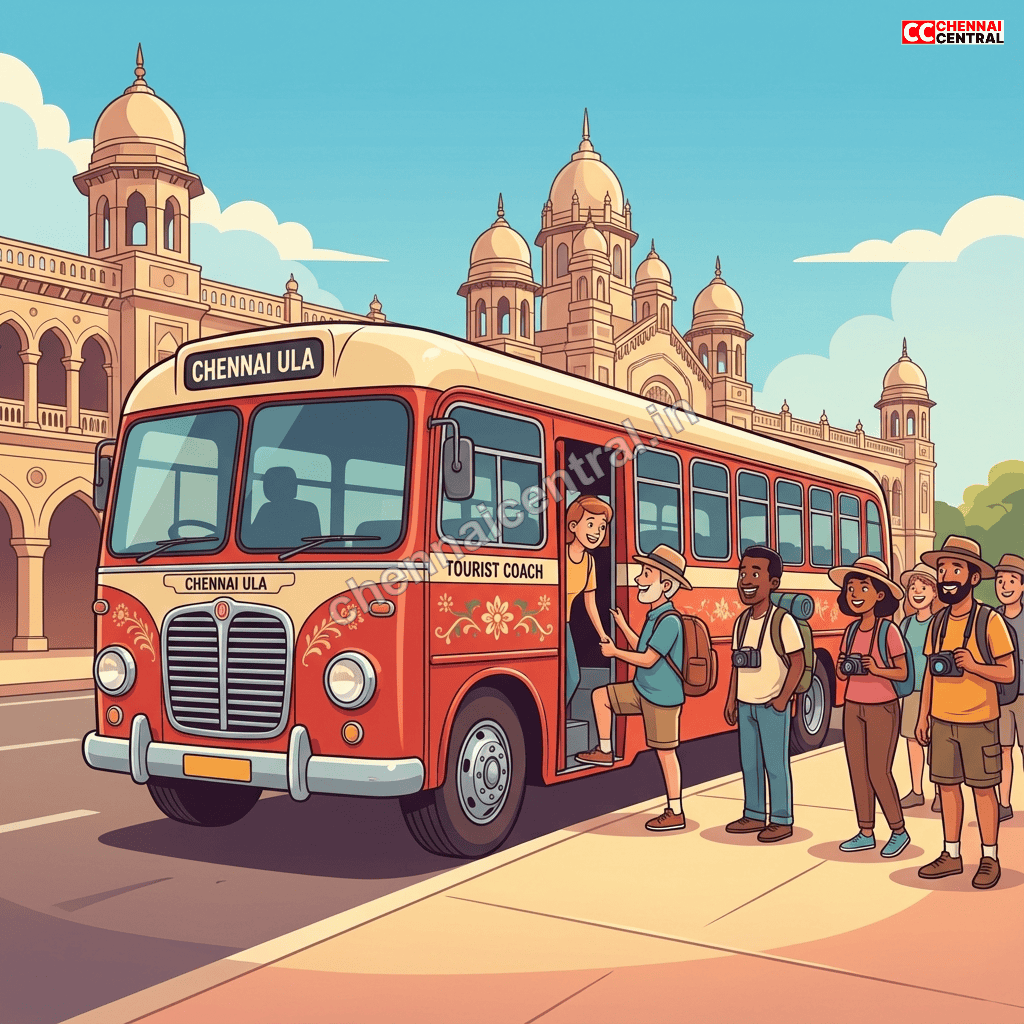
Want to explore Chennai‘s rich heritage without the hassle of planning transportation between landmarks? The ‘Chennai Ula’ Hop-On Hop-Off service offers the perfect solution.
This MTC Chennai Ula bus takes you on a nostalgic journey through the city’s most iconic cultural and historical sites for just ₹50. Whether you are a tourist visiting Chennai for the first time or a resident wanting to rediscover your city, this Chennai heritage bus tour provides an affordable, convenient, and memorable sightseeing experience.
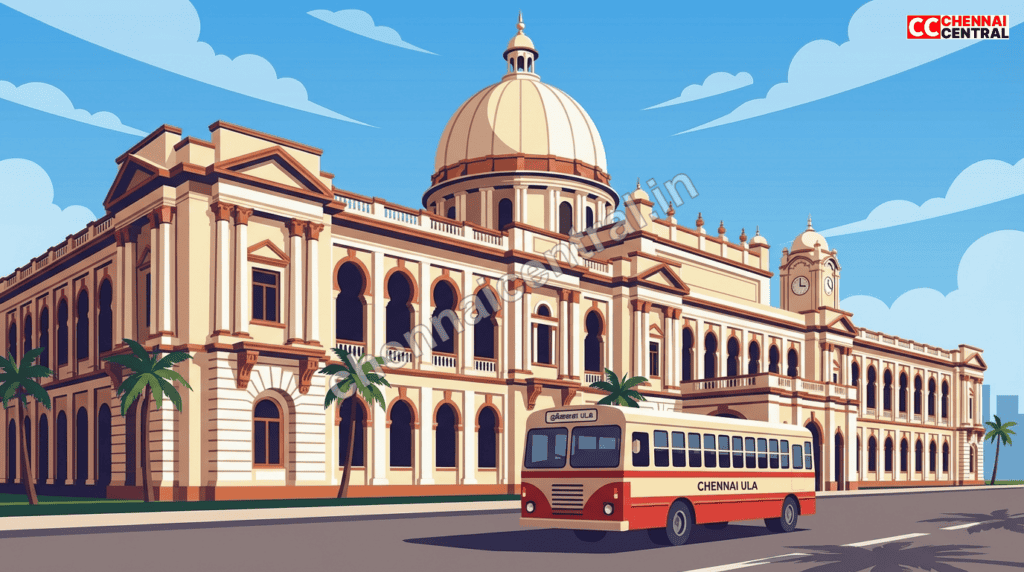
The Chennai Ula bus service operates vintage-styled buses that recreate the charm of 1970s and 1980s public transport. With a single ticket valid for the entire day, you can hop on and hop off at 16-18 major landmarks along a 30-kilometer circular route.
This guide covers everything you need to know about the Chennai Ula Hop-On Hop-Off service, including routes, stops, timings, ticket booking, and insider tips for making the most of your Chennai sightseeing bus experience.
What Is the Chennai Ula Hop-On Hop-Off Bus Service?
The Chennai Ula Hop-On Hop-Off service is a dedicated tourist bus initiative operated by the Metropolitan Transport Corporation (MTC). The name “Ula” means “tour” or “procession” in Tamil, reflecting the service’s purpose of taking passengers on a curated journey through Chennai’s heritage landmarks.
How Does the Chennai Ula Bus Concept Work?
The hop-on hop-off concept allows maximum flexibility for tourists. You purchase a single ticket that remains valid for the entire day. You can board the bus at any designated stop along the circular route. When you reach a landmark you want to explore, you simply get off. After spending time at that location, you wait at the same stop and board the next available Chennai Ula bus to continue your journey.
This system eliminates the need to negotiate with auto-rickshaws, book multiple cabs, or figure out complex city bus routes. The Chennai vintage tourist bus handles all transportation between major tourist spots, letting you focus entirely on sightseeing.
Who Operates the Chennai Ula Bus Service?
The MTC Chennai Ula bus service is operated by the Metropolitan Transport Corporation, the same government agency that runs Chennai’s regular public bus network. This official backing ensures reliability, safety, and standardized service quality. Commercial operations began in January 2026, making this a recent addition to Chennai’s tourism infrastructure.
What Makes the Chennai Ula Vintage Bus Special?
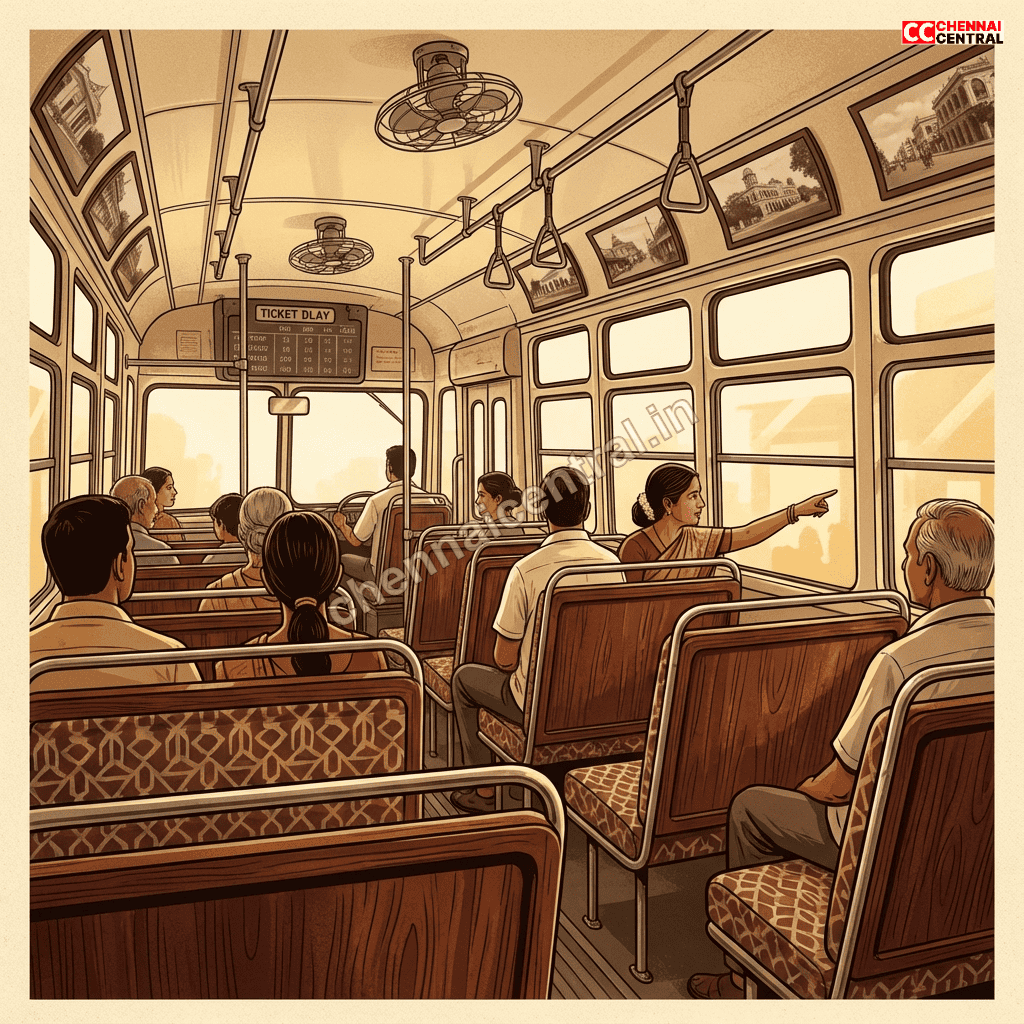
The Chennai vintage bus tour experience goes beyond simple transportation. The buses themselves are attractions, designed to evoke nostalgia for Chennai’s past while providing modern comfort.
Vintage Design and Aesthetics
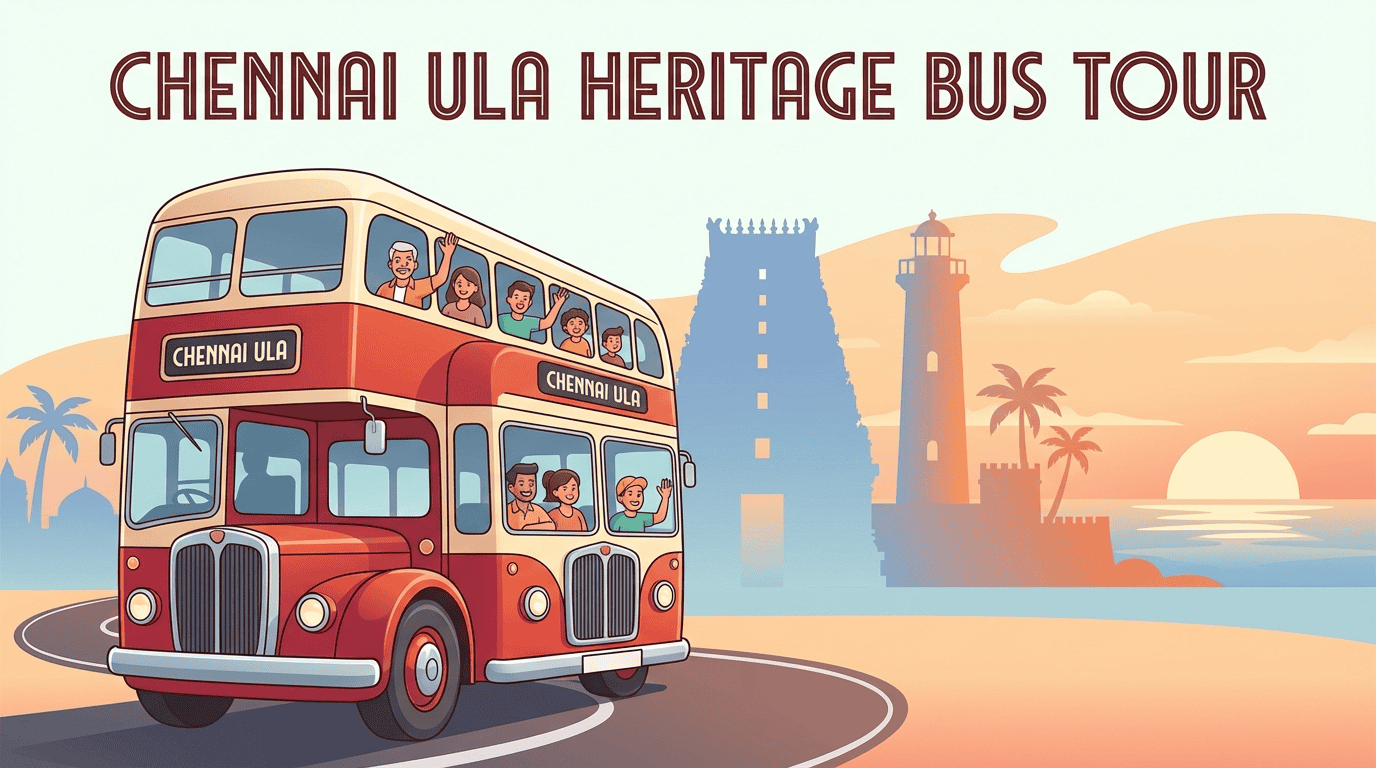
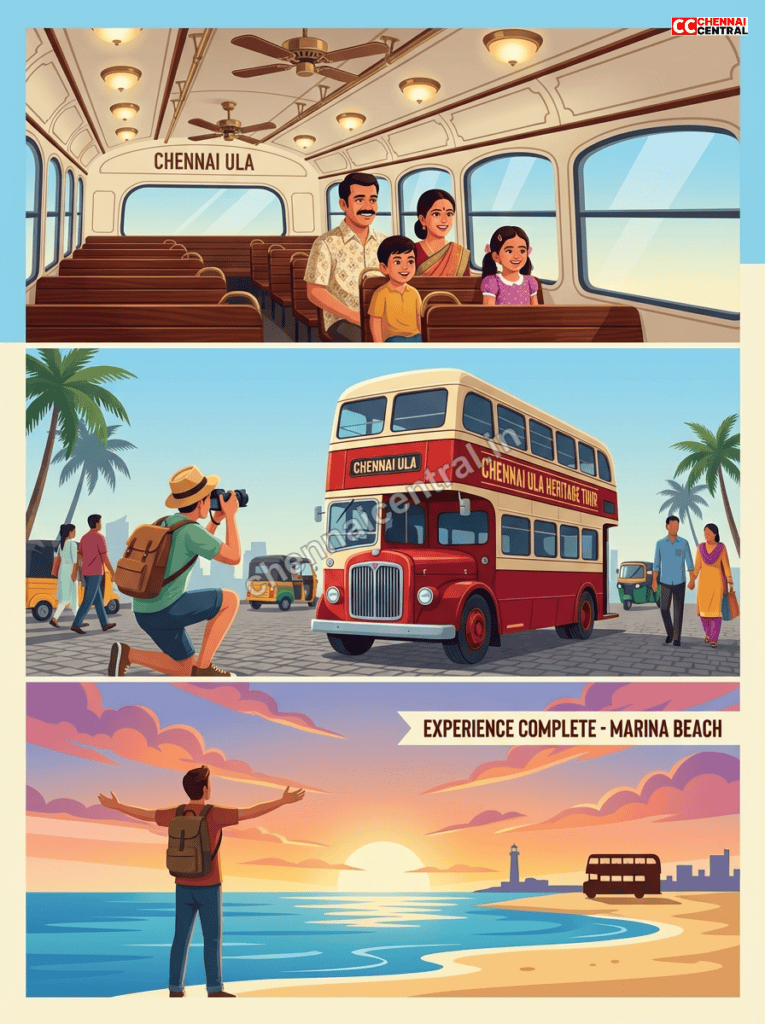
The Chennai Ula fleet consists of buses remodeled to resemble public transport vehicles from the 1970s and 1980s. The exterior features a distinctive retro red-and-cream color scheme that immediately distinguishes these buses from regular MTC vehicles. This classic color combination was common on Chennai buses decades ago, and seeing it today triggers fond memories for older residents.
Inside, the buses feature wooden-style interiors that recreate the ambiance of vintage public transport. Photo frames displaying images of old Madras (Chennai’s former name) line the interior, offering glimpses into the city’s history even during transit. These visual elements transform the bus ride itself into a heritage experience.
Modern Amenities for Comfort
Despite the retro styling, the Chennai Ula buses incorporate modern amenities for passenger comfort and safety. GPS systems track bus locations and help maintain schedule accuracy. Public address (PA) systems allow conductors to announce approaching stops and share information about landmarks. The combination of nostalgic design and contemporary technology creates a unique travel experience.
What Is the Chennai Ula Bus Route Map?
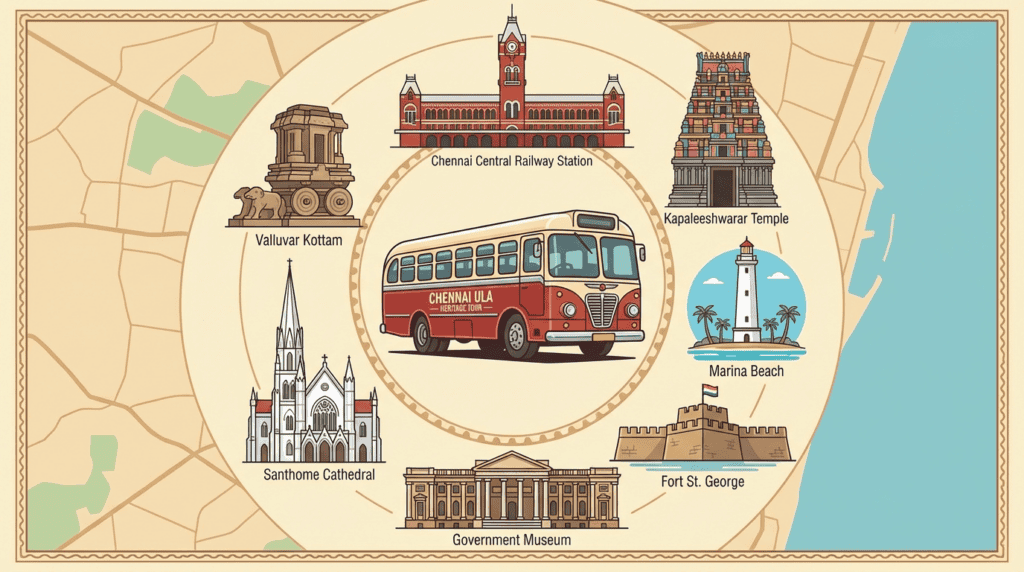
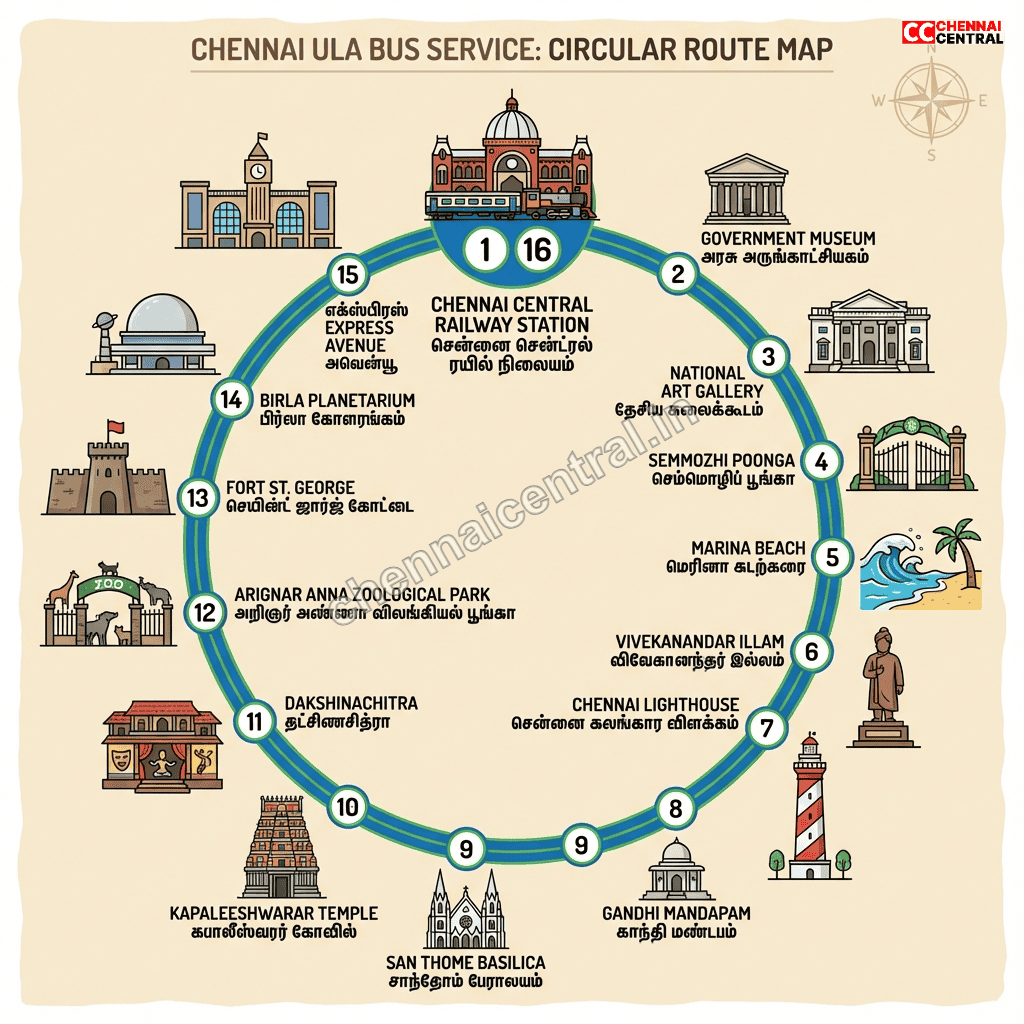
The Chennai Ula bus route map follows a circular path covering approximately 30 kilometers. This route connects 16-18 major cultural, historical, and architectural landmarks across Chennai. Understanding the route helps you plan which stops to prioritize based on your interests.
Chennai Ula Bus Starting Point
The Chennai Ula bus starting point is Puratchi Thalaivar Dr. MGR Central Railway Station, commonly known as Chennai Central. This location makes the service easily accessible for tourists arriving by train from other cities. Chennai Central is also well-connected by metro, local trains, and regular buses, making it a convenient meeting point regardless of where you stay in the city.
Complete Chennai Ula Bus Stops List
The Chennai Ula bus stops list covers the following landmarks in order along the circular route:
| Stop Number | Landmark | Highlight |
|---|---|---|
| 1 | Chennai Central | Starting point, historic railway station |
| 2 | Victoria Hall | Colonial-era memorial building |
| 3 | Ripon Building | Chennai Corporation headquarters, Indo-Saracenic architecture |
| 4 | Park Station | Access to People’s Park and Zoological Garden |
| 5 | Egmore Railway Station | Heritage railway station, architectural landmark |
| 6 | Government Museum | One of India’s oldest museums, Egmore |
| 7 | Valluvar Kottam | Monument to Tamil poet Thiruvalluvar |
| 8 | Semmozhi Poonga | Botanical garden with rare plants |
| 9 | Luz Corner | Access to Kapaleeshwarar Temple, Mylapore |
| 10 | Santhome Cathedral Basilica | Historic church, tomb of St. Thomas |
| 11 | Chennai Lighthouse | Iconic lighthouse with city views |
| 12 | Vivekanandar Illam | Ice House, Swami Vivekananda museum |
| 13 | Marina Beach | Kannagi Statue, Gandhi Statue areas |
| 14 | War Memorial | Tribute to Indian armed forces |
| 15 | Fort St. George | Secretariat, historic British fort |
| 16 | Madras High Court | Colonial-era judicial building |
The bus also passes by Napier Bridge and Anna Flyover (Gemini Bridge), offering views of these iconic structures during transit even without dedicated stops.
Does Chennai Ula Bus Go to Marina Beach?
Yes, the Chennai Ula bus does go to Marina Beach. Marina Beach is one of the key stops on the circular route, located between Vivekanandar Illam and the War Memorial. The bus stops near the Kannagi Statue and Gandhi Statue areas, giving you access to the world’s second-longest urban beach.
This makes the Chennai Ula service an excellent option for tourists wanting to visit Chennai Central to Marina Beach and other landmarks without arranging separate transportation. The single ₹50 ticket covers your entire journey, whether you spend an hour at Marina Beach or just want a quick photo stop before continuing to Fort St. George.
What Are the Chennai Ula Bus Timings?
Understanding the Chennai Ula bus timings helps you plan your heritage tour effectively. The service operates on different schedules for weekdays versus weekends and holidays.
Chennai Ula Bus Timings Weekdays
On weekdays (Monday through Friday), the Chennai Ula bus timings weekdays are 4:00 PM to 10:00 PM. This afternoon-to-evening schedule accommodates working professionals and students who can join the tour after regular hours. The evening timing also allows you to experience landmarks like Marina Beach and the Lighthouse during sunset.
Weekend and Holiday Timings
On Saturdays, Sundays, and public holidays, the Chennai Ula service operates from 10:00 AM to 10:00 PM. This extended 12-hour window gives you maximum flexibility for a full-day heritage exploration. You can start your tour in the morning, take lunch breaks, and continue sightseeing until evening.
Chennai Ula Bus Frequency
The Chennai Ula bus frequency is approximately every 30 minutes. This means if you get off at a landmark, you can expect the next bus to arrive within half an hour. During peak hours on weekends, multiple buses may operate on the route simultaneously, potentially reducing wait times.
Full Loop Duration
A complete circuit of the Chennai Ula circular route without getting off takes approximately 2 hours. This gives you a sense of how much time to allocate if you want to experience the entire route. If you plan to explore multiple stops in depth, allocate 4-6 hours for a comprehensive heritage tour.
| Schedule Type | Operating Hours | Best For |
|---|---|---|
| Weekdays (Mon-Fri) | 4:00 PM – 10:00 PM | Evening tours, sunset views |
| Weekends (Sat-Sun) | 10:00 AM – 10:00 PM | Full-day exploration |
| Public Holidays | 10:00 AM – 10:00 PM | Extended sightseeing |
What Is the Ticket Price for Chennai Ula Bus?
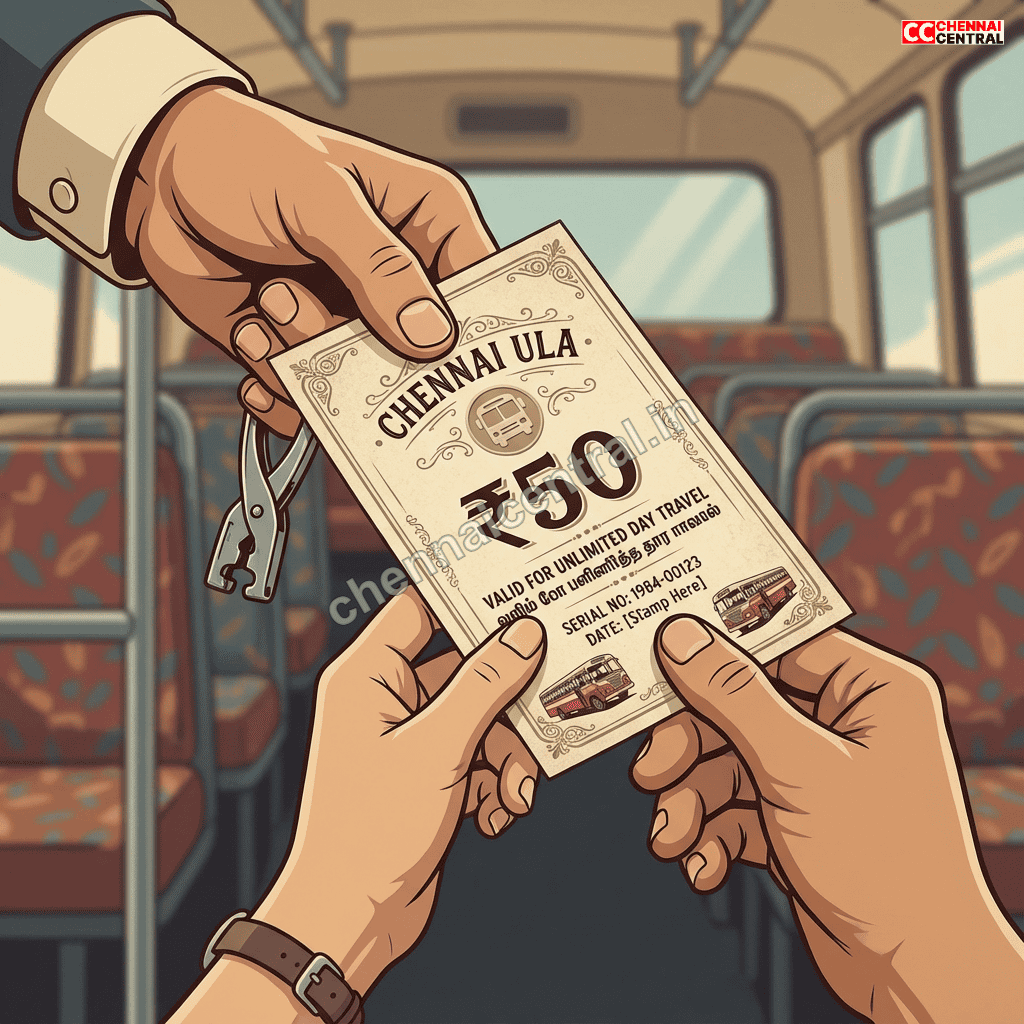
The ticket price for Chennai Ula bus is just ₹50 per person. This flat rate applies to all passengers regardless of age (children typically pay the same fare). The affordability makes this Chennai tourist bus 50 rupees option one of the most budget-friendly ways to explore the city’s heritage.
Is Chennai Ula Ticket Valid for the Whole Day?
Yes, the Chennai Ula ticket is valid for the whole day. Once you purchase your ₹50 ticket, you can use it for unlimited rides on Chennai Ula buses throughout the operating hours. This means you can hop on, hop off, and hop back on as many times as you want until the service ends for the day.
However, note that the ticket is valid only on Chennai Ula vintage buses. It cannot be used on regular MTC white or yellow board buses. Keep your ticket safe throughout the day as conductors may check it each time you board.
Important Fare Note
Unlike regular MTC town buses where women can travel free under state government schemes, the Chennai Ula tourist service requires all passengers to purchase tickets. This applies regardless of gender, as the service operates under separate tourism-focused guidelines.
How to Book Chennai Ula Bus Tickets Online?
Booking your Chennai Ula bus tickets online is simple and convenient through the official digital platform.
Chennai Ula Bus Ticket Booking Chennai One App
Digital tickets are available through the “Chennai One” mobile application. This official app serves as the primary platform for Chennai Ula bus ticket booking Chennai One app purchases.
How to Download Chennai One App for Bus Tickets
Follow these steps to download Chennai One app for bus tickets:
Step 1: Open Google Play Store (Android) or Apple App Store (iOS) on your smartphone.
Step 2: Search for “Chennai One” in the search bar.
Step 3: Look for the official app published by Greater Chennai Corporation or the Tamil Nadu government.
Step 4: Download and install the application.
Step 5: Create an account or sign in using your mobile number.
Step 6: Navigate to the transport or tourism section to find Chennai Ula ticket options.
Step 7: Select your travel date, number of passengers, and complete payment.
Step 8: Save the digital ticket on your phone to show conductors when boarding.
Offline Ticket Purchase Options
If you prefer offline ticket purchase or do not have the app, you can buy tickets directly from conductors on board the bus. Tickets are also available at major terminals including Chennai Central Railway Station, Egmore Railway Station, and Marina Beach area stops. Cash payments are accepted for offline purchases.
What Heritage Landmarks Can You Visit on Chennai Ula Route?
The Chennai Ula vintage bus route stops cover a diverse range of historical, cultural, religious, and architectural landmarks. Here is a detailed look at each major stop and what you can explore there.
Chennai Central Railway Station
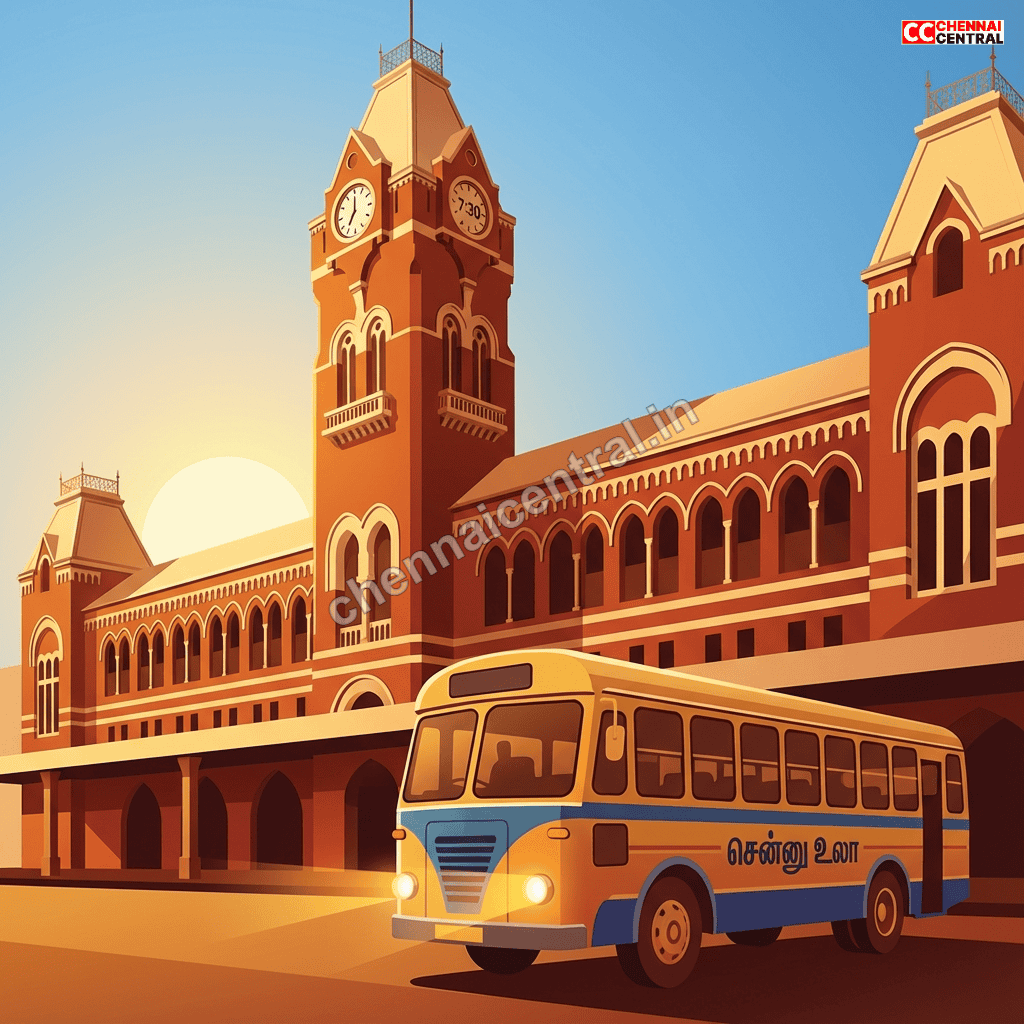
Your Chennai heritage bus tour begins at Chennai Central, officially named Puratchi Thalaivar Dr. MGR Central Railway Station. This iconic building, completed in 1873, showcases stunning Indo-Saracenic architecture. The red-brick structure with its distinctive tower is one of Chennai’s most photographed landmarks. Even if you are not traveling by train, the station’s exterior and main hall are worth exploring.
Victoria Hall
Victoria Hall stands as a memorial to Queen Victoria, built during the British colonial period. The building now houses the Tamil Nadu Legislative Council library. Its European-style architecture contrasts with the Indo-Saracenic buildings nearby, offering a glimpse into Chennai’s colonial past.
Ripon Building
Ripon Building serves as the headquarters of the Greater Chennai Corporation. This magnificent structure exemplifies Indo-Saracenic architecture with its domes, arches, and intricate detailing. Named after Lord Ripon, a British Viceroy, the building is best viewed from the outside as interior access is restricted.
Park Station and Surroundings
The Park Station stop provides access to Chennai’s People’s Park area. Nearby attractions include the Zoological Garden (Chennai Snake Park) and the Children’s Museum. This stop is particularly interesting for families traveling with children who want a break from historical monuments.
Egmore Railway Station
Egmore Railway Station is another architectural gem from the colonial era. Built in the early 1900s, this station serves as a terminus for trains heading to southern Tamil Nadu. The Indo-Saracenic design features red-brick construction similar to Chennai Central but with distinct styling. The station’s heritage value makes it worth photographing even during a brief stop.
Government Museum (Egmore)
The Government Museum at Egmore ranks among India’s oldest museums, established in 1851. The complex includes several buildings housing archaeology, anthropology, bronze, and art galleries. The famous Bronze Gallery contains one of the finest collections of Chola bronzes in the world. Plan to spend 1-2 hours here if you want to explore the museum properly.
The museum complex also includes the National Art Gallery and the Contemporary Art Gallery. These institutions offer comprehensive insights into Tamil Nadu’s artistic heritage spanning centuries.
Valluvar Kottam
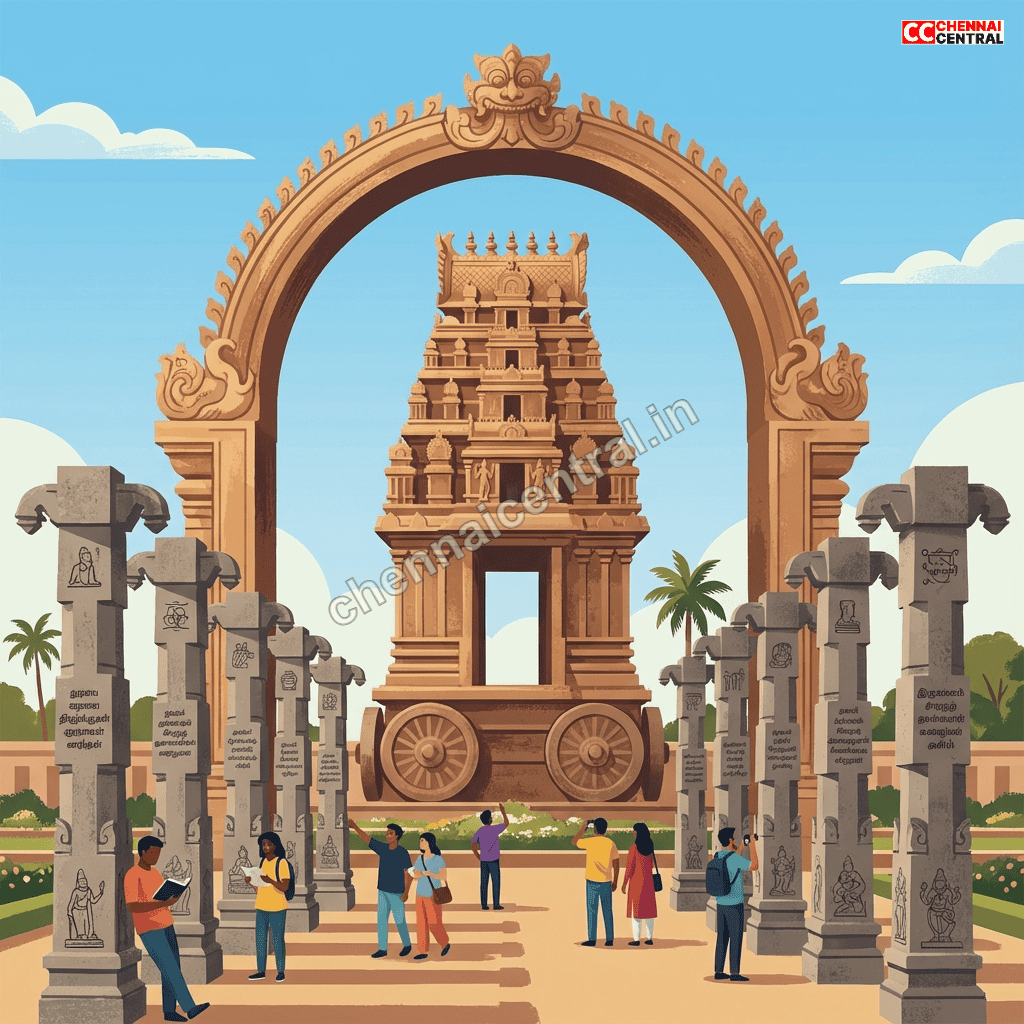
Valluvar Kottam is a monument dedicated to the classical Tamil poet and philosopher Thiruvalluvar, author of the Thirukkural. The structure resembles a temple chariot (ther) and features all 1,330 couplets of the Thirukkural inscribed on granite pillars. The auditorium here is one of Asia’s largest, capable of seating over 4,000 people. The monument beautifully represents Tamil cultural pride and literary heritage.
Semmozhi Poonga
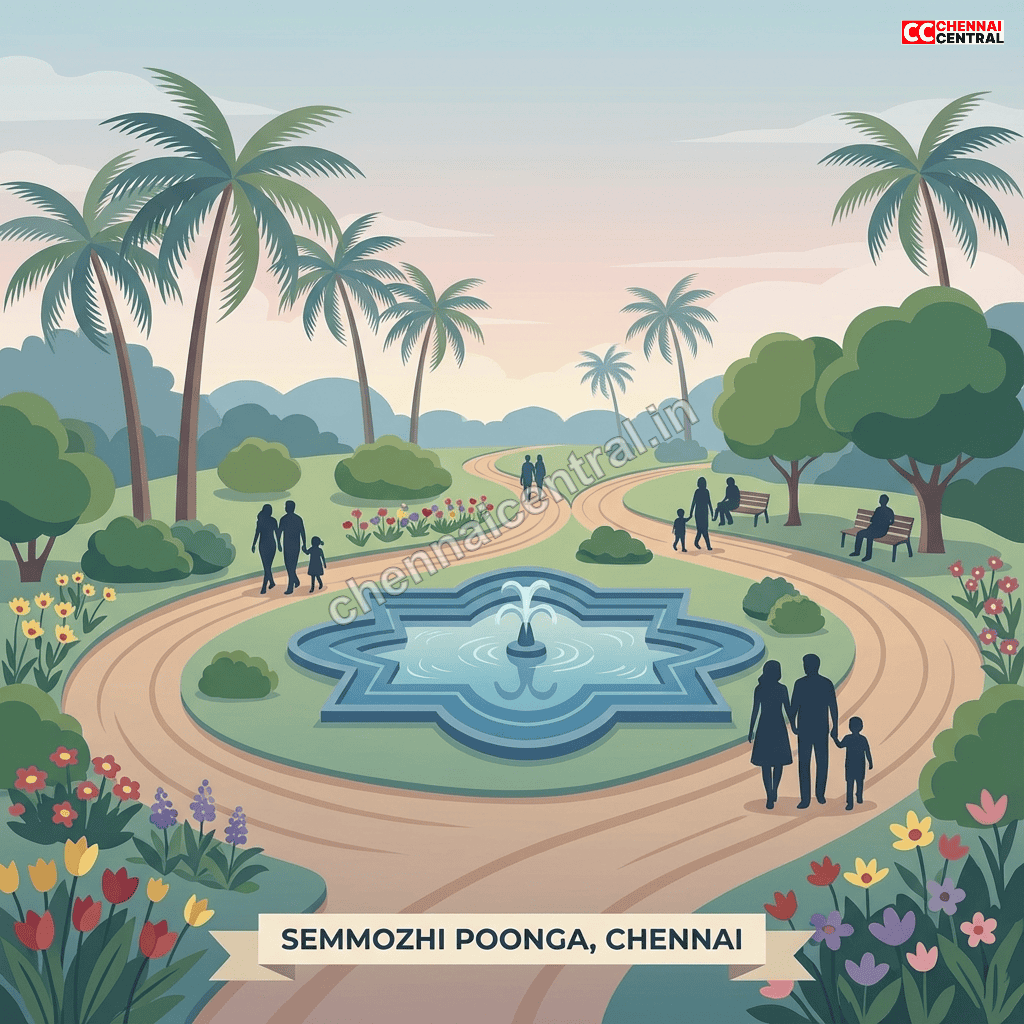
Semmozhi Poonga (literally “Classical Language Park”) is a botanical garden spread over 20 acres. The garden features over 500 plant species, including many rare varieties. Walking paths, water bodies, and themed sections make this an excellent spot for nature lovers seeking a peaceful break during their heritage tour. The garden’s design incorporates Tamil cultural elements, connecting nature with regional identity.
Luz Corner and Kapaleeshwarar Temple
The Luz Corner stop provides access to Kapaleeshwarar Temple, one of Chennai’s most important Hindu temples. Dedicated to Lord Shiva, this Dravidian-style temple features a stunning gopuram (gateway tower) covered with colorful sculptures depicting various deities and mythological scenes. The temple is located in the historic Mylapore neighborhood, which itself is worth exploring for its traditional shops, silk stores, and street food.
Mylapore represents old Madras culture at its finest. The narrow streets around the temple offer authentic South Indian breakfast spots, filter coffee shops, and traditional jewelry stores. Allow extra time if you want to explore beyond the temple itself.
Santhome Cathedral Basilica
Santhome Cathedral Basilica is a Roman Catholic church built over the tomb of St. Thomas the Apostle, one of the twelve disciples of Jesus Christ. The current Gothic Revival structure dates to 1896, though churches have existed on this site for centuries. The cathedral is one of only three churches worldwide built over an apostle’s tomb, making it a significant pilgrimage site.
The underground tomb chapel and the church museum offer deeper insights into the history of Christianity in India. The white Gothic spires create a striking visual landmark along the coast.

Chennai Lighthouse
The Chennai Lighthouse stands as one of the city’s most iconic structures. The current lighthouse, built in 1977, rises 57 meters and offers panoramic views of Marina Beach, the Bay of Bengal, and the Chennai cityscape. Visitors can climb to the observation gallery (when open) for stunning photographs, especially during sunset hours.
The lighthouse has become a symbol of Chennai, appearing in countless photographs and films. Its location along the Marina Beach promenade makes it a natural stop during any heritage tour.
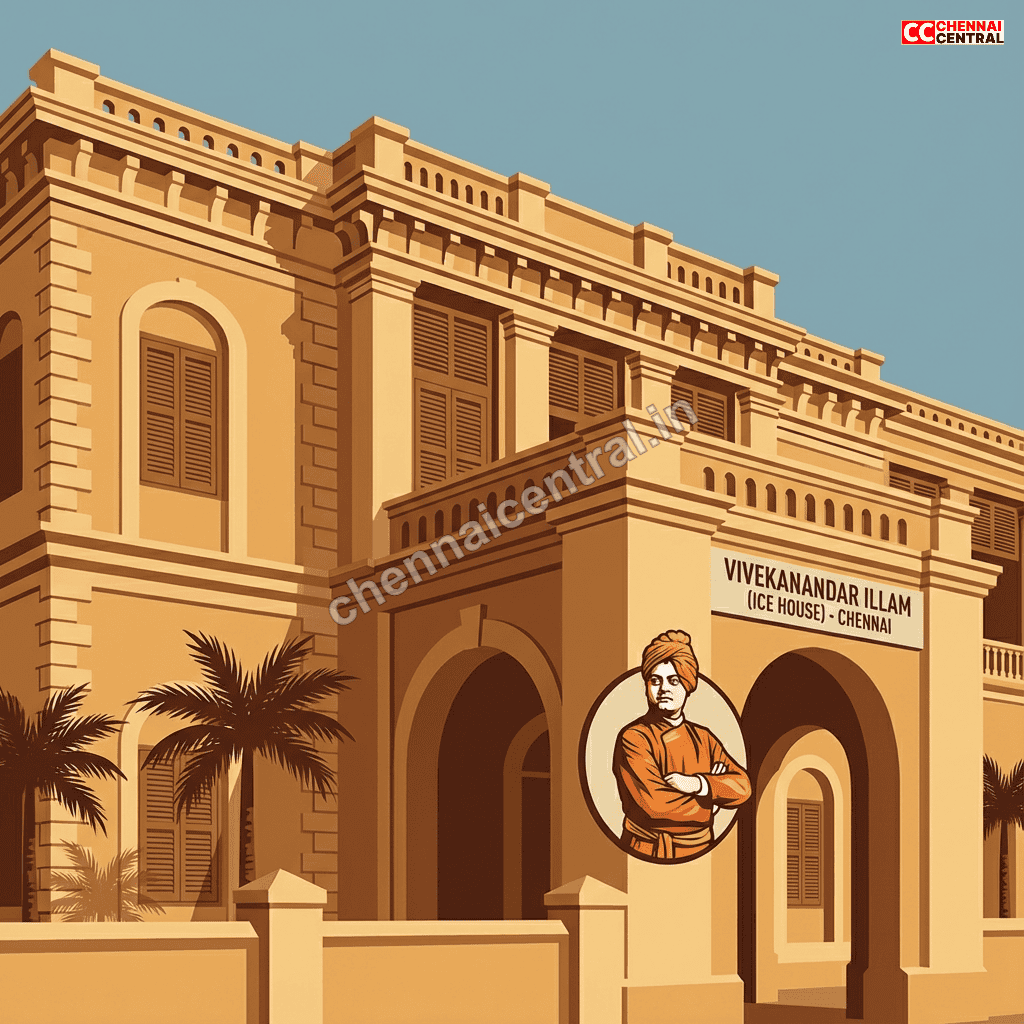
Vivekanandar Illam (Ice House)
Vivekanandar Illam, popularly known as the Ice House, is a historic building where Swami Vivekananda stayed in 1897 after his famous speech at the Parliament of World’s Religions in Chicago. The building originally stored ice imported from North America before refrigeration technology arrived in India.
Today, the structure houses a museum dedicated to Swami Vivekananda’s life and teachings. The exhibitions include photographs, letters, and personal belongings. The building’s unique history as both an ice storage facility and a spiritual landmark makes it doubly interesting.
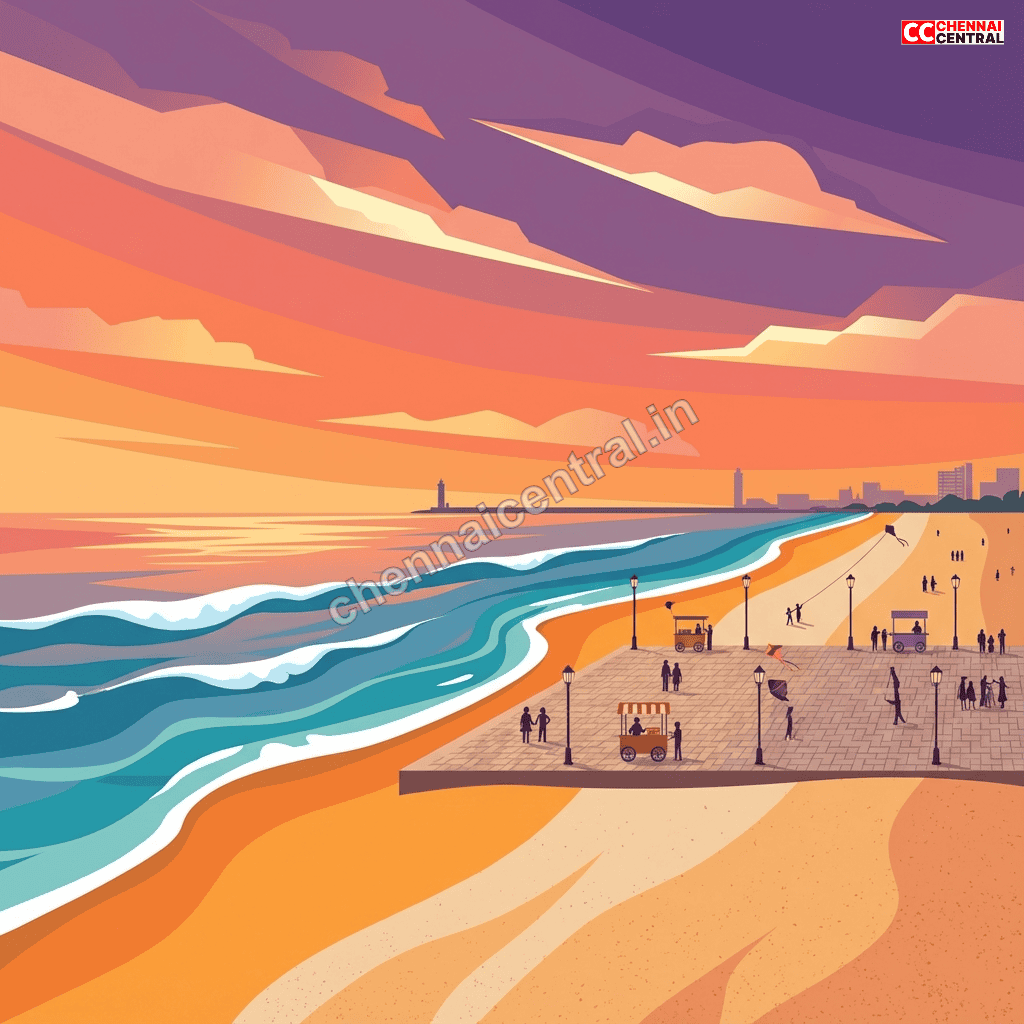
Marina Beach
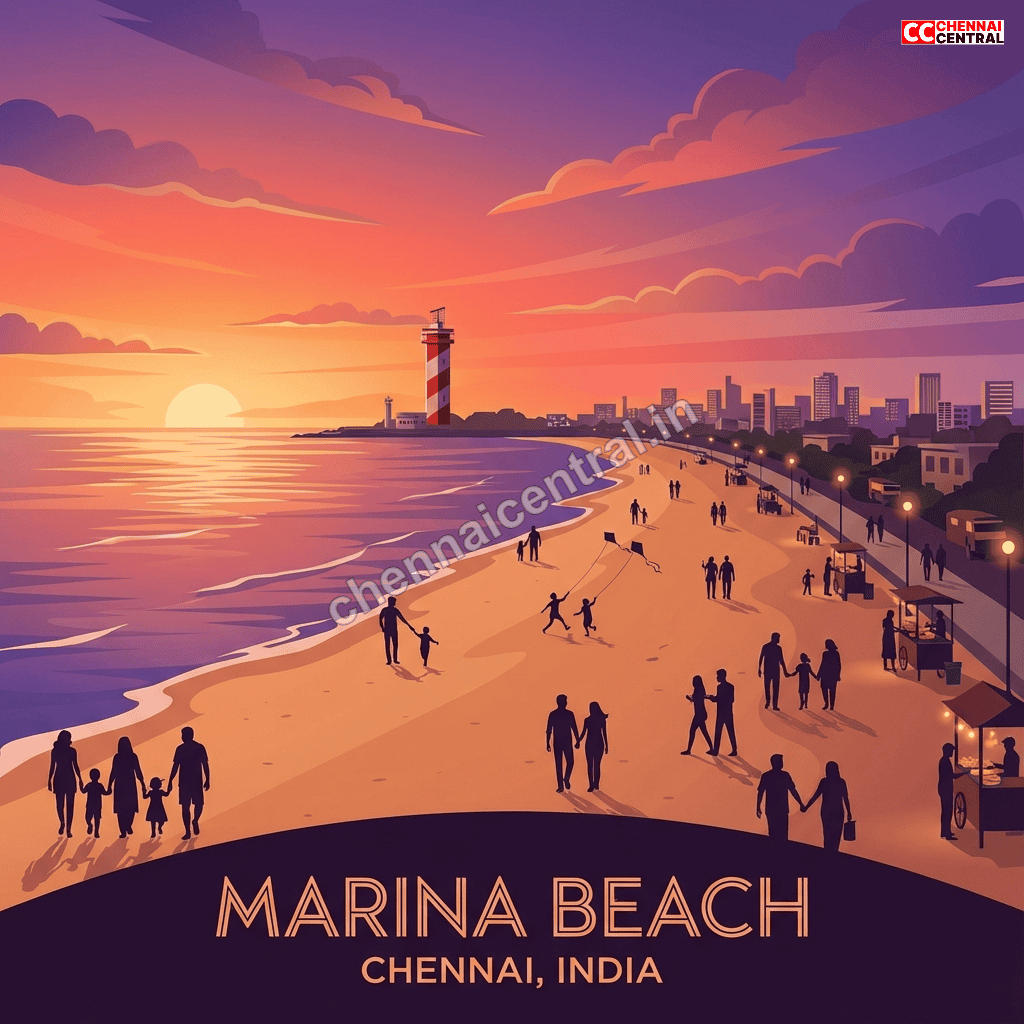
Marina Beach stretches approximately 13 kilometers along Chennai’s coastline, making it the world’s second-longest urban beach after Cox’s Bazar in Bangladesh. The Chennai Ula bus stops near the Kannagi Statue and Gandhi Statue areas, central points along the beach promenade.
The beach offers views of the Bay of Bengal, evening food stalls selling sundal (boiled legumes) and bhajji (fried snacks), and a vibrant atmosphere especially during weekends. Sunrise and sunset create spectacular photo opportunities. The promenade features statues of famous Tamil poets and leaders.
War Memorial
The War Memorial at Marina Beach pays tribute to Indian armed forces personnel who sacrificed their lives in various conflicts. The memorial features a central pillar surrounded by well-maintained gardens. It serves as a solemn reminder of military sacrifice while offering a peaceful space for reflection along the beach route.
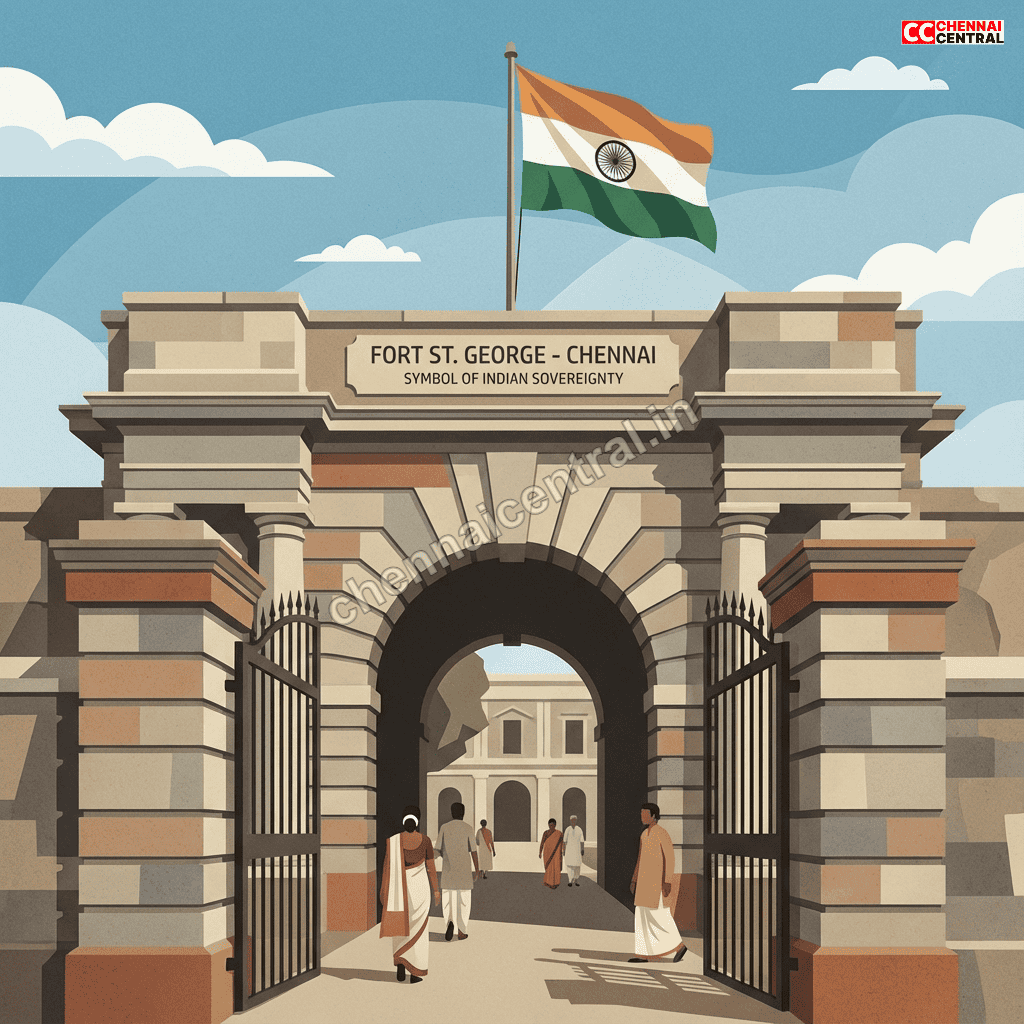
Fort St. George
Fort St. George holds immense historical significance as the first major English settlement in India. Built in 1644 by the British East India Company, the fort now houses the Tamil Nadu Legislative Assembly and Secretariat. The Fort Museum inside displays artifacts from the colonial period, including weapons, coins, uniforms, and documents.
St. Mary’s Church within the fort compound is the oldest Anglican church in India, dating to 1680. The fort walls and gateways create atmospheric settings for history enthusiasts and photographers.
Madras High Court
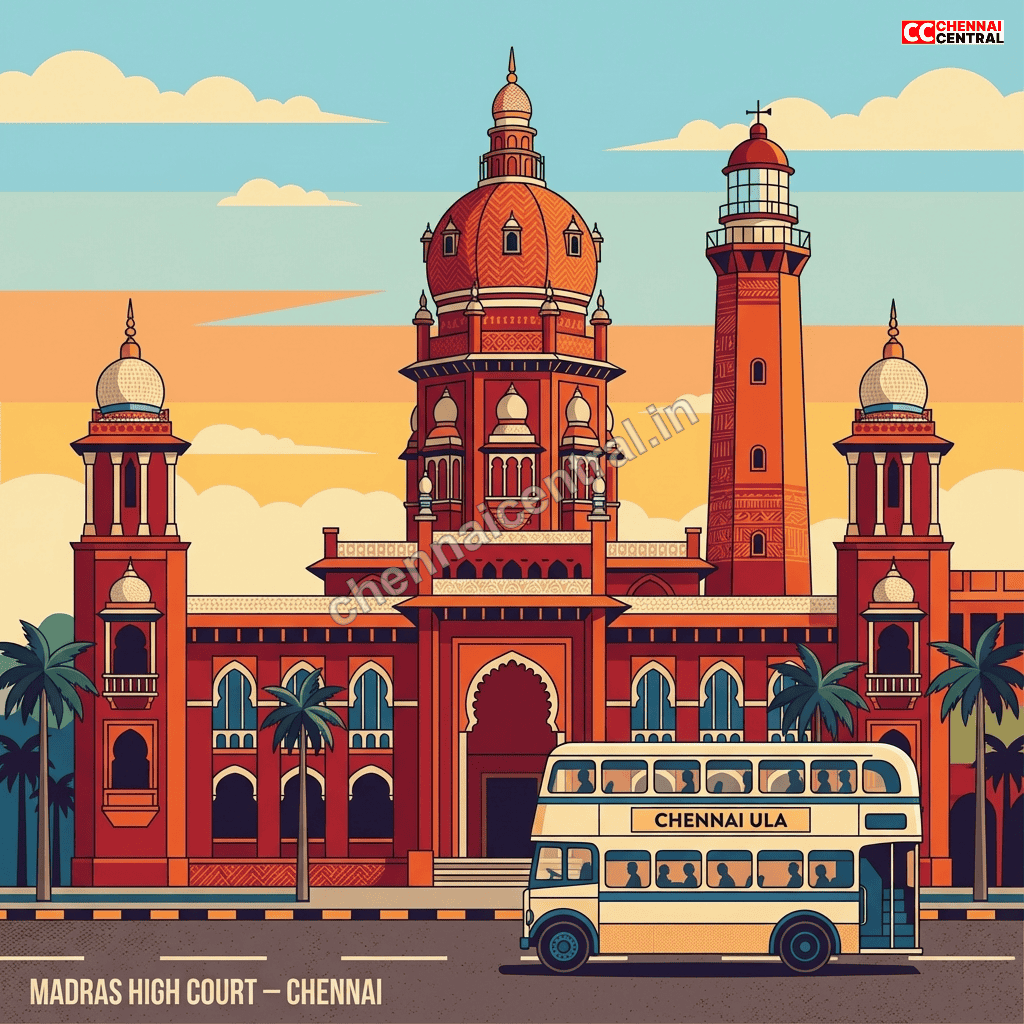
The Madras High Court building is an architectural masterpiece combining Indo-Saracenic elements with Victorian Gothic influences. Built in 1892, the red-brick structure features domes, minarets, and a distinctive lighthouse-shaped tower. The building ranks among the largest court complexes in the world.
While interior access is restricted to those with official business, the exterior provides excellent photography opportunities. The building’s scale and architectural details make it a fitting conclusion to the heritage circuit before returning to Chennai Central.
How to Plan Your Chennai Ula Heritage Tour Itinerary?
Planning your Chennai sightseeing bus experience requires balancing your interests with available time. Here are suggested itineraries based on different preferences and time constraints.
Half-Day History Focused Itinerary (4-5 Hours)
For visitors primarily interested in colonial and historical sites:
3:30 PM: Start at Chennai Central. Photograph the station exterior.
4:00 PM: Board Chennai Ula bus. Pass Victoria Hall and Ripon Building (view from bus or brief photo stop).
4:30 PM: Hop off at Government Museum Egmore. Explore galleries for 90 minutes.
6:00 PM: Board next bus to Fort St. George. Explore fort and museum for 60 minutes.
7:00 PM: Continue to Madras High Court for exterior photography during golden hour.
7:30 PM: Return to Chennai Central to complete circuit.
Half-Day Religious and Cultural Itinerary (4-5 Hours)
For visitors interested in temples, churches, and cultural monuments:
10:00 AM (Weekend): Start at Chennai Central.
10:30 AM: Hop off at Valluvar Kottam. Explore monument for 45 minutes.
11:30 AM: Board bus to Luz Corner. Visit Kapaleeshwarar Temple. Explore Mylapore for 90 minutes including traditional breakfast.
1:00 PM: Board bus to Santhome Cathedral. Visit church and underground tomb for 45 minutes.
2:00 PM: Continue circuit back to Chennai Central.
Full-Day Comprehensive Itinerary (7-8 Hours)
For visitors wanting the complete Chennai heritage bus tour packages for family experience:
10:00 AM: Begin at Chennai Central. Take one complete loop without stopping to orient yourself (2 hours).
12:00 PM: Hop off at Government Museum. Explore until 2:00 PM.
2:00 PM: Board bus to Semmozhi Poonga. Lunch at nearby restaurants and garden visit until 3:30 PM.
3:30 PM: Continue to Kapaleeshwarar Temple and Mylapore exploration until 5:00 PM.
5:00 PM: Board bus to Marina Beach. Evening beach walk and sunset at Lighthouse area until 6:30 PM.
6:30 PM: Continue to Fort St. George for evening visit until 7:30 PM.
7:30 PM: Complete circuit back to Chennai Central.
What Are the Best Tips for Chennai Ula Bus Experience?
Maximizing your Chennai sightseeing bus experience requires some practical preparation. These insider tips help you avoid common frustrations and make the most of your heritage tour.
Timing Your Visit Strategically
Weekend mornings (10:00 AM start) offer the longest exploration window with 12 hours of service. Arrive at Chennai Central by 9:45 AM to catch the first bus. Morning hours provide better lighting for photography at outdoor monuments like Valluvar Kottam and Fort St. George.
Weekday visits (4:00 PM onwards) work well if you prefer evening atmospheres. Marina Beach, the Lighthouse area, and Kapaleeshwarar Temple have special charm during sunset and early evening hours. The reduced weekday timing means prioritizing fewer stops for deeper exploration.
Managing Wait Times at Stops
With Chennai Ula bus frequency at every 30 minutes, plan your landmark visits accordingly. If a site requires only 15-20 minutes (like exterior photography at Ripon Building), you might wait for the next bus. For locations requiring longer exploration (Government Museum, Kapaleeshwarar Temple), the 30-minute frequency works perfectly.
Carry a book, download entertainment on your phone, or use wait times to review photos and plan next stops. The vintage bus stops often have shade or seating areas, making waits comfortable.
Staying Hydrated and Comfortable
Chennai’s weather remains warm throughout the year, with summer months being particularly hot. Carry a water bottle and refill at restaurants or shops near stops. Wear comfortable walking shoes suitable for temple visits, beach walks, and museum exploration. Light, breathable cotton clothing works best.
Sunscreen and sunglasses are essential for outdoor stops like Marina Beach, the Lighthouse, and Valluvar Kottam. A small umbrella provides protection from both sun and occasional rain.
Respecting Dress Codes
Several stops on the Chennai Ula route have dress code requirements. Kapaleeshwarar Temple requires modest clothing covering shoulders and knees. Men may need to remove shirts before entering certain temple areas. Santhome Cathedral also expects respectful attire.
Carry a light scarf or shawl that can quickly cover shoulders if needed. Avoid shorts and sleeveless tops if temple visits are on your itinerary.
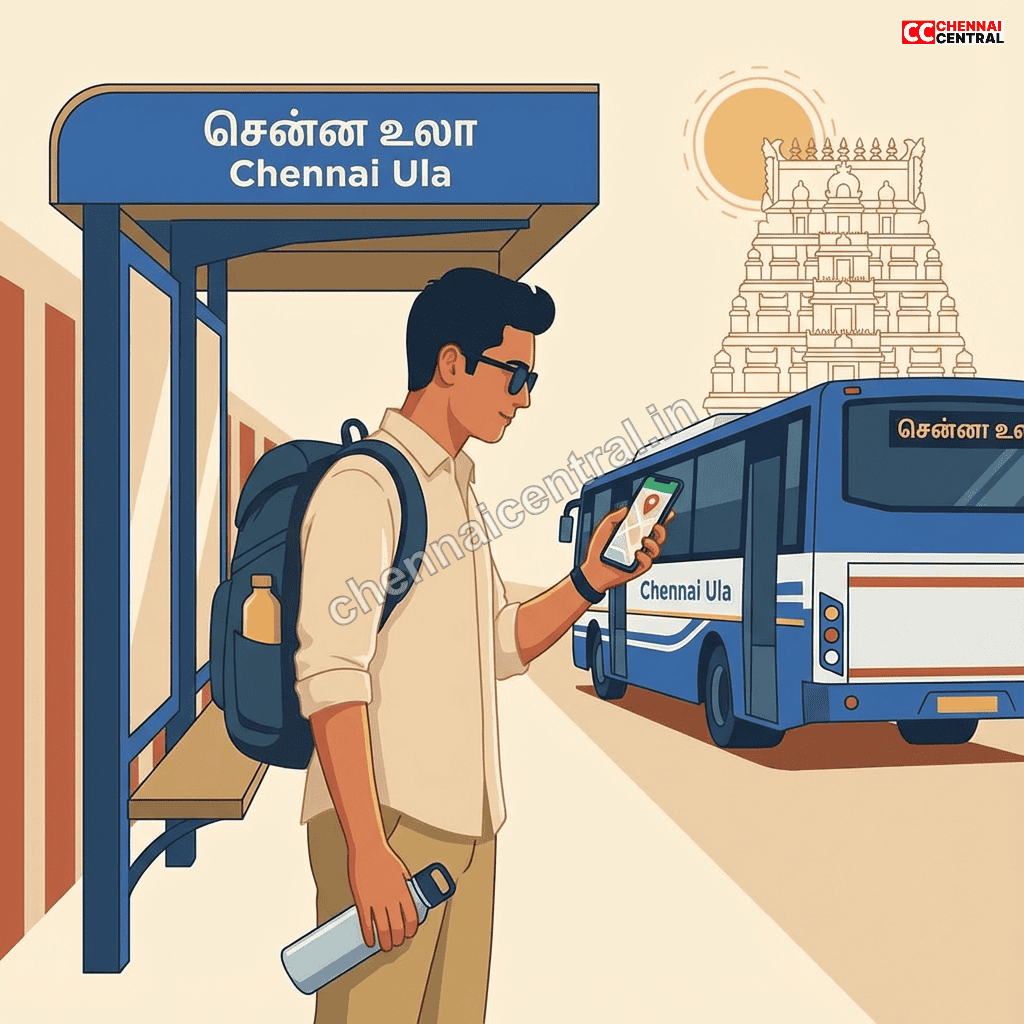
Photography Tips for Heritage Sites
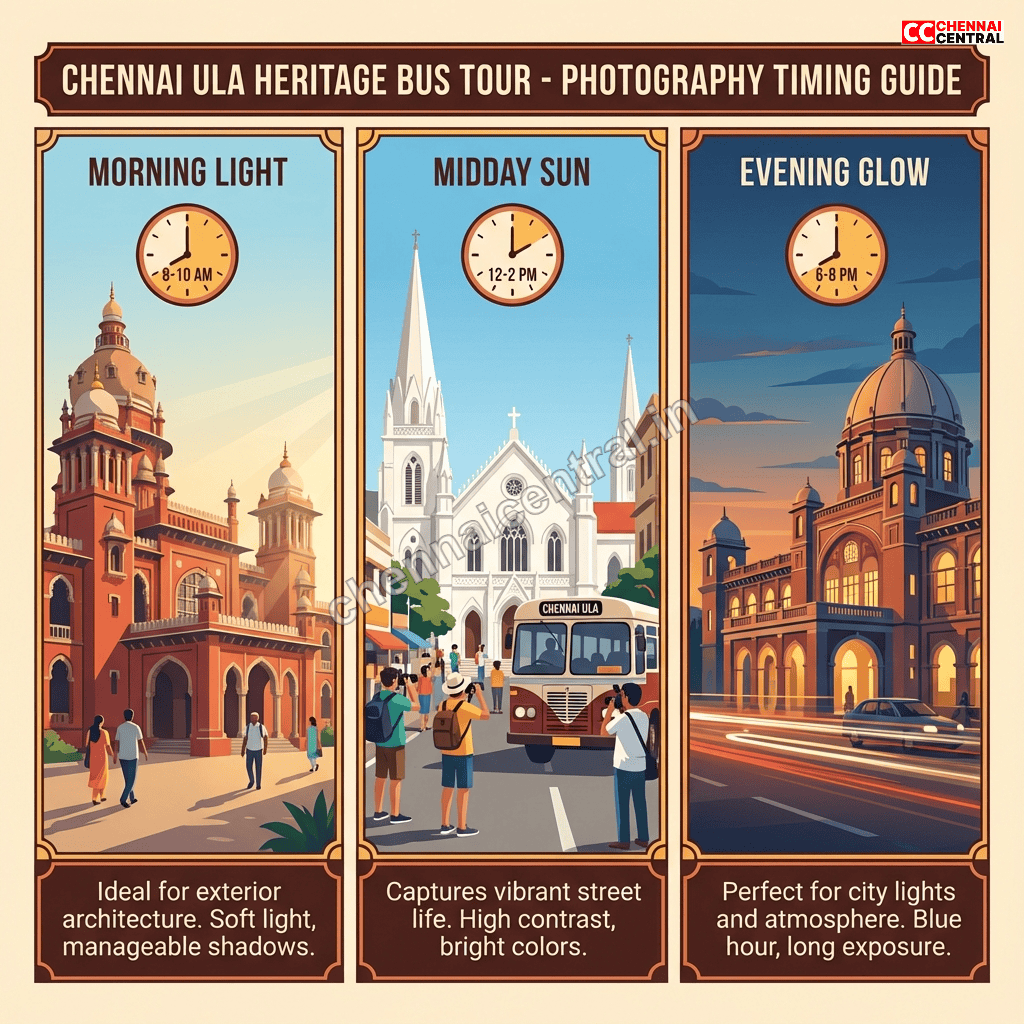
The Chennai Ula route offers exceptional photography opportunities. Early morning light (10:00 AM – 12:00 PM) creates ideal conditions for architectural shots at Chennai Central, Ripon Building, and Government Museum. Golden hour (5:00 PM – 6:30 PM) produces stunning images at Marina Beach, the Lighthouse, and coastal monuments.
Some sites like Government Museum and Fort Museum have photography restrictions or fees inside. Check at entrances before using cameras. Exterior photography is generally unrestricted at all stops.
The vintage Chennai Ula buses themselves make excellent photo subjects. Capture the red-and-cream exterior, the wooden interior details, and the old Madras photo frames for unique memories.
Keeping Your Ticket Safe
Your ₹50 ticket is your pass for unlimited travel throughout the day. Conductors check tickets each time you board a new bus. Losing your ticket means purchasing a new one. Keep it in a secure pocket or phone case rather than loose in bags where it might fall out.
If using the digital ticket through Chennai One app, ensure your phone is charged throughout the day. Carry a power bank as backup, especially for full-day tours.
How Does Chennai Ula Compare to Other Chennai Tour Options?
Chennai offers several sightseeing alternatives. Understanding how the MTC Chennai tourist bus 50 rs ticket compares helps you choose the right option for your needs.
Chennai Ula vs TTDC Electric Double Decker Bus
The TTDC electric double decker bus Chennai service operated by Tamil Nadu Tourism Development Corporation offers a different experience. The TTDC buses typically run on fixed tour schedules rather than hop-on hop-off formats. They often include guide commentary and follow specific itineraries.
Chennai Ula advantages include lower pricing (₹50 vs higher TTDC rates), flexibility to explore at your own pace, and unlimited re-boarding throughout the day. TTDC advantages may include air-conditioned coaches, professional guides, and curated tour narratives.
| Feature | Chennai Ula (MTC) | TTDC Double Decker |
|---|---|---|
| Price | ₹50 (all day) | Higher (varies by tour) |
| Format | Hop-on hop-off | Fixed itinerary tour |
| Flexibility | High (unlimited stops) | Low (guided schedule) |
| Bus Type | Vintage styled | Modern double decker |
| Guide | No (self-guided) | Yes (tour guide included) |
| Frequency | Every 30 minutes | Fixed departure times |
Chennai Ula vs Private Tourist Bus Rental
Chennai private tourist bus rental services cater to groups wanting customized itineraries. Private rentals allow you to visit any location (not just fixed routes), travel at your own schedule, and have dedicated transportation throughout the day.
Chennai Ula advantages for individual travelers and small groups include dramatically lower costs, no advance booking requirements, and the unique vintage bus experience. Private rentals make sense for large groups (20+ people) wanting customized routes or visiting locations outside the Chennai Ula circuit.
Chennai Ula vs Regular Auto-Rickshaws and Cabs
Using auto-rickshaws or app-based cabs (Ola, Uber) to visit the same landmarks would cost significantly more than ₹50. A rough calculation covering Chennai Central to Marina Beach to Mylapore to Government Museum and back could easily exceed ₹500-800 in cab fares.
Chennai Ula provides predictable pricing, eliminates fare negotiations, and removes the stress of finding transportation at each stop. The trade-off is less flexibility in timing and route customization.
Chennai Ula vs Walking Tours
Walking tours of specific neighborhoods (like Mylapore or George Town) offer deep exploration of concentrated areas. Chennai Ula connects distant landmarks across 30 kilometers, impossible to cover on foot in a day.
The ideal approach combines both: use Chennai Ula to reach areas like Mylapore or Fort St. George, then explore on foot before boarding the next bus.
What Food and Refreshment Options Exist Along Chennai Ula Route?
A full-day Chennai heritage bus tour requires food breaks. Several stops offer excellent dining options representing authentic Chennai cuisine.
Breakfast and South Indian Meals Near Mylapore (Luz Corner)
Mylapore is famous for traditional South Indian breakfast spots. Within walking distance of Kapaleeshwarar Temple, you can find establishments serving idli, dosa, vada, pongal, and filter coffee. Some iconic eateries have operated for decades, offering authentic flavors at reasonable prices.
Look for small restaurants and “mess” establishments near the temple’s east and west entrances. Morning visits (10:00 AM – 11:30 AM on weekends) coincide perfectly with breakfast service hours.
Lunch Options Near Government Museum (Egmore)
The Egmore area around the Government Museum has several restaurant options ranging from budget-friendly meals to mid-range establishments. South Indian thali (complete meal platters), biryani, and North Indian cuisine are available within walking distance of the museum.
The nearby Egmore Railway Station area also has food stalls and small restaurants catering to travelers, offering quick and affordable options.
Evening Snacks at Marina Beach
Marina Beach comes alive with food vendors during evening hours. Street food specialties include sundal (spiced boiled legumes), bajji/pakoda (fried vegetable fritters), murukku, and roasted corn. Ice cream and fresh fruit vendors line the promenade.
For a more substantial meal, restaurants and food courts exist along the roads adjacent to the beach. The beach food experience is part of Chennai culture and worth trying during your visit.
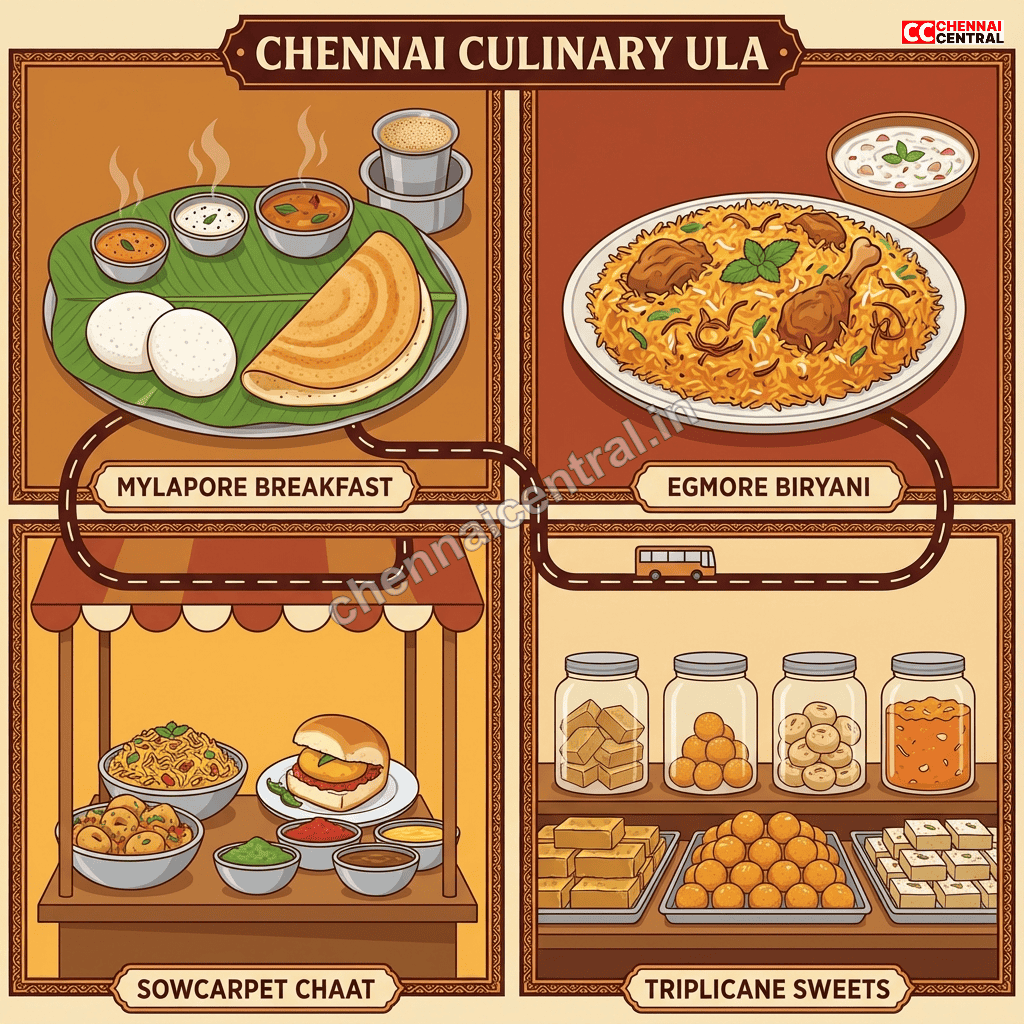
Refreshments at Semmozhi Poonga
Semmozhi Poonga botanical garden has a small refreshment area inside. After walking through the gardens, you can find packaged snacks and beverages. The peaceful garden environment makes it a pleasant spot for a mid-tour break.
Staying Hydrated Throughout
Small shops and vendors near most Chennai Ula stops sell bottled water, soft drinks, and packaged snacks. Tender coconut water vendors are common at Marina Beach and other outdoor locations, providing natural hydration in Chennai’s warm climate.
What Are Common Questions About Chennai Ula Service?
First-time visitors often have specific questions about the Chennai Ula Hop-On Hop-Off service. Here are detailed answers to frequently asked questions.
Can Children Travel on Chennai Ula Bus?
Yes, children can travel on Chennai Ula buses. The ₹50 fare typically applies to all passengers. Very young children (usually below age 5 or a certain height) may travel free when accompanied by a ticket-holding adult, following standard MTC policies. Confirm current child fare policies when boarding.
The vintage bus experience appeals to children who enjoy the retro aesthetics and the excitement of hopping on and off at different locations. Family-friendly stops include Marina Beach, Semmozhi Poonga gardens, and the Government Museum.
Is Chennai Ula Bus Wheelchair Accessible?
The vintage-styled buses may have limited accessibility features compared to modern low-floor buses. Passengers with mobility challenges should inquire about specific accessibility accommodations when boarding. Some stops along the route (particularly heritage buildings) also have accessibility limitations due to their historical construction.
Can I Carry Luggage on Chennai Ula Bus?
Small bags and backpacks are generally permitted on Chennai Ula buses. However, large suitcases or heavy luggage may be impractical given the hop-on hop-off nature of the service. If you have luggage, consider storing it at Chennai Central Railway Station’s cloakroom before beginning your heritage tour.
Does Chennai Ula Bus Have Air Conditioning?
The vintage-styled Chennai Ula buses prioritize authentic retro aesthetics over modern air conditioning. The buses have windows that can be opened for ventilation. During hot Chennai afternoons, indoor attractions like Government Museum, Semmozhi Poonga, and Santhome Cathedral provide air-conditioned relief.
What Happens If I Miss the Last Bus?
The Chennai Ula service operates until 10:00 PM (weekends/holidays) or 10:00 PM (weekdays). If you miss the last bus at a stop, you will need to arrange alternative transportation (auto-rickshaw, cab, or regular MTC bus) to return to your destination. Plan your final stop strategically to ensure you catch a bus back to Chennai Central or your preferred exit point before service ends.
Is Chennai Ula Available During Monsoon?
The Chennai Ula service operates throughout the year, including monsoon season (October-December). However, heavy rains may affect your sightseeing experience at outdoor stops like Marina Beach, Valluvar Kottam, and the Lighthouse. Indoor attractions (Government Museum, Santhome Cathedral, Vivekanandar Illam) remain enjoyable regardless of weather.
Can I Take Pets on Chennai Ula Bus?
Pets are generally not permitted on public transport buses including Chennai Ula. Service animals may be exceptions with proper documentation. Confirm current policies if traveling with animals.
What Should You Know About Individual Chennai Ula Stops?
Detailed knowledge about each stop helps you decide where to invest your time during the Chennai vintage tourist bus journey.
Chennai Central: More Than Just a Starting Point
Chennai Central Railway Station deserves exploration beyond being the Chennai Ula bus starting point. The station building, completed in 1873, represents one of India’s finest examples of railway architecture. The central tower, red-brick facades, and covered platforms showcase Victorian-era engineering.
Inside, the main hall features high ceilings and period details. The station serves millions of passengers annually, creating a vibrant atmosphere that captures Chennai’s energy. Photography enthusiasts should arrive early to capture the building in morning light before crowds build.
The area around Chennai Central includes George Town, one of Chennai’s oldest commercial districts. If time permits, a brief walk into George Town reveals wholesale markets, traditional shops, and colonial-era commercial buildings.
Victoria Hall: Colonial Memorial
Victoria Hall was constructed in 1888 to commemorate Queen Victoria’s Golden Jubilee. The memorial building now functions as a library and cultural space. The exterior architecture features typical colonial elements including symmetrical design, arched windows, and decorative stonework.
A brief photo stop suffices for most visitors unless you have specific interest in colonial memorials. The building is best photographed from across the street to capture its full facade.
Ripon Building: Civic Pride
Ripon Building serves as the headquarters for Greater Chennai Corporation, making it the administrative heart of India’s fourth-largest city. Named after Lord Ripon, the British Viceroy who introduced local self-governance reforms in the 1880s, the building symbolizes civic administration.
The Indo-Saracenic architecture features a central dome, corner towers, and intricate decorative elements blending Indian and European styles. The building is particularly photogenic during golden hour when warm light enhances the stonework details.
Interior access is restricted to official business, but the exterior and surrounding plaza provide excellent photography opportunities. The building often appears in films and photographs representing Chennai’s governance heritage.
Government Museum Egmore: Treasure House of History
The Government Museum at Egmore ranks among India’s premier museums and deserves significant time allocation. Established in 1851, the museum complex spans multiple buildings across landscaped grounds.
Bronze Gallery: This section houses one of the world’s finest collections of South Indian bronze sculptures. Chola-period bronzes depicting Shiva Nataraja, Vishnu, and various deities represent artistic achievements spanning centuries. Art historians consider this collection globally significant.
Archaeological Section: Artifacts from excavations across Tamil Nadu including stone tools, pottery, inscriptions, and sculptures trace human habitation from prehistoric times through medieval periods.
Anthropology Section: Displays covering tribal cultures, traditional crafts, and ethnographic materials provide insights into Tamil Nadu’s diverse communities.
National Art Gallery: Located within the museum complex, this gallery displays Rajput and Mughal miniature paintings, Tanjore paintings, and modern Indian art.
Children’s Museum: Interactive exhibits engage younger visitors with science, nature, and culture topics.
Plan minimum 90 minutes for a basic visit. Art and history enthusiasts could spend 3-4 hours exploring thoroughly. The museum has nominal entry fees separate from your Chennai Ula ticket.
Valluvar Kottam: Monument to Tamil Literature
Valluvar Kottam celebrates Thiruvalluvar, the ancient Tamil poet whose work Thirukkural remains influential after two millennia. The Thirukkural consists of 1,330 couplets covering ethics, politics, and love, organized into 133 chapters.
The monument’s architecture resembles a temple chariot (ther), a traditional vehicle used during religious festivals. The main structure stands 39 meters tall, dominating the surrounding area. Granite pillars throughout the complex display all 1,330 Thirukkural couplets, allowing visitors to read and contemplate the wisdom.
The auditorium within the complex seats over 4,000 people and hosts cultural events. The surrounding gardens provide peaceful spaces for reflection. Tamil speakers particularly appreciate the literary significance, but all visitors can admire the architectural grandeur and cultural pride the monument represents.
Allow 30-45 minutes for exploration and photography. Evening visits offer pleasant temperatures and softer lighting for photographs.
Semmozhi Poonga: Urban Oasis
Semmozhi Poonga translates to “Classical Language Garden,” referencing Tamil’s status as a classical language. This 20-acre botanical garden opened in 2010 and quickly became popular among Chennai residents seeking green spaces.
The garden features over 500 plant species organized in themed sections. Walking paths wind through lawns, around water features, and past flowering plants. The design incorporates Tamil cultural elements including sculptures and inscriptions celebrating classical literature.
Highlights include the fern house, butterfly garden, and traditional medicinal plants section. The peaceful atmosphere contrasts with Chennai’s urban bustle, making this stop ideal for mid-tour relaxation.
The garden charges a nominal entry fee. Morning visits (weekends) offer cooler temperatures and fewer crowds. The garden typically closes before evening, so check timings if visiting on weekday Chennai Ula schedules.
Kapaleeshwarar Temple: Dravidian Splendor
Kapaleeshwarar Temple in Mylapore represents Dravidian temple architecture at its finest. Dedicated to Lord Shiva (Kapaleeshwarar) and his consort Karpagambal, the temple draws thousands of devotees daily.
The main gopuram (gateway tower) rises approximately 37 meters and features hundreds of colorful stucco figures depicting deities, mythological scenes, and celestial beings. The current temple structure dates primarily to the 16th century, though worship at this site extends back over a millennium.
Inside, the temple complex contains multiple shrines, mandapams (pillared halls), and a sacred tank. The architecture follows traditional Dravidian principles with concentric enclosures and axial alignment. Devotees perform rituals including circumambulation, lighting oil lamps, and offering prayers.
Visitor Etiquette: Remove footwear before entering. Dress modestly covering shoulders and knees. Photography may be restricted in certain areas. Respect worshippers and maintain silence in shrine areas. Men may be asked to remove shirts in specific sections.
Beyond the temple, Mylapore neighborhood offers traditional shops selling flowers, religious items, silk sarees, and jewelry. The famous “Mylai” filter coffee and South Indian snacks attract food enthusiasts. Allow 60-90 minutes to explore the temple and surrounding streets.
Santhome Cathedral Basilica: Apostolic Heritage
Santhome Cathedral Basilica holds unique religious significance as one of only three churches worldwide built over an apostle’s tomb. According to tradition, St. Thomas the Apostle arrived in India in 52 CE and was martyred near Chennai in 72 CE.
The current Gothic Revival structure was completed in 1896, replacing earlier Portuguese-built churches on the same site. The white facade features pointed arches, twin spires, and stained glass windows typical of Gothic architecture. The contrast of European Gothic style against tropical surroundings creates striking visual impressions.
Underground Tomb: Steps lead down to the chapel housing St. Thomas’s tomb. The atmospheric underground space attracts pilgrims from around the world. The tomb area maintains a contemplative atmosphere appropriate for prayer and reflection.
Museum: A small museum within the cathedral complex displays artifacts related to St. Thomas, early Christianity in India, and the church’s history. Exhibits include ancient crosses, historical photographs, and religious items.
The cathedral welcomes visitors of all faiths. Masses occur at scheduled times. Respectful attire is expected. Photography is generally permitted except during services. Allow 30-45 minutes for a complete visit including the tomb and museum.
Chennai Lighthouse: Iconic Landmark
The Chennai Lighthouse stands as one of the city’s most recognizable structures. The current lighthouse, built in 1977, replaced earlier lighthouses that guided ships into Madras harbor for centuries.
Rising 57 meters (about 18 stories), the lighthouse offers observation galleries providing panoramic views. On clear days, visitors can see Marina Beach stretching north and south, the Bay of Bengal’s waters, and Chennai’s urban landscape extending inland.
Visiting Information: The lighthouse is open to visitors during specific hours (typically afternoon). Entry requires a nominal fee. Visitors climb stairs to reach observation levels. The climb is manageable for most fitness levels but may challenge those with mobility issues.
Sunset visits are particularly popular for photography. The lighthouse silhouette against orange and purple skies creates memorable images. Even if not climbing, the lighthouse exterior and surrounding promenade area offer excellent photo opportunities.
Vivekanandar Illam (Ice House): Spiritual and Historical Legacy
Vivekanandar Illam, popularly known as the Ice House, combines two fascinating historical narratives. The building’s original purpose and its later spiritual significance make it a unique stop on the Chennai Ula bus route.
Ice House History: Before refrigeration technology reached India, ice was imported from North America. Ships carried ice blocks harvested from frozen lakes in the northeastern United States, packed in sawdust for insulation during the long voyage. This building served as Chennai’s ice storage facility in the 19th century, preserving imported ice for use by colonial residents and businesses. The thick walls and specialized construction helped maintain cold temperatures.
Vivekananda Connection: Swami Vivekananda, the renowned Hindu monk who represented India at the 1893 Parliament of World’s Religions in Chicago, stayed at this building in 1897 upon his return to India. His famous Chicago speech beginning “Sisters and Brothers of America” brought international attention to Hindu philosophy and Indian spirituality.
The building now operates as a museum dedicated to Swami Vivekananda’s life, teachings, and legacy. Exhibits include photographs, letters, personal belongings, and displays covering his spiritual journey, travels, and the Ramakrishna Mission he founded.
The museum maintains a contemplative atmosphere. Visitors can learn about Vivekananda’s philosophy emphasizing service, education, and spiritual development. The combination of the building’s unique ice storage history and its spiritual significance creates a thought-provoking experience.
Allow 30-45 minutes for museum exploration. The location near Marina Beach makes it convenient to combine with beach visits during the same hop-off.
Marina Beach: Chennai’s Coastal Pride
Marina Beach defines Chennai’s identity as a coastal city. Stretching approximately 13 kilometers along the Bay of Bengal, it ranks as the world’s second-longest urban beach after Cox’s Bazar in Bangladesh.
The Chennai Ula bus stops near the central promenade area, providing access to multiple attractions along the beach.
Kannagi Statue: This statue honors Kannagi, the heroine of the Tamil epic Silapathikaram. The sculpture depicts her holding the anklet that proves central to the epic’s narrative about justice and devotion.
Gandhi Statue: A prominent statue of Mahatma Gandhi stands along the promenade, commemorating the independence leader’s connection to Chennai and his broader freedom struggle.
Labor Statue: Also known as the Triumph of Labour statue, this sculpture depicts four men pushing a boulder, symbolizing workers’ strength and dignity.
Beach Promenade: The paved walkway stretches along the beach, lined with statues of Tamil poets, freedom fighters, and cultural figures. Evening walks along this promenade are a beloved Chennai tradition.
Beach Activities: While swimming is not recommended due to strong currents, visitors enjoy walking on the sand, flying kites, playing cricket, and photographing sunrises and sunsets. Horse and pony rides are sometimes available.
Food Stalls: Evening brings dozens of vendors selling Chennai beach specialties including sundal (spiced boiled legumes), bajji (fried vegetable fritters), murukku (crunchy savory snacks), boiled peanuts, and ice cream. The beach food experience is quintessentially Chennai.
Marina Beach visits work best during early morning (sunrise) or evening (sunset) hours. Midday visits involve harsh sun and heat. Weekend evenings see large crowds creating festive atmospheres but also congestion.
War Memorial: Honoring Sacrifice
The War Memorial along Marina Beach honors Indian armed forces personnel who sacrificed their lives in various conflicts. The memorial provides a space for reflection and remembrance within the otherwise recreational beach environment.
The central structure features a pillar or flame surrounded by well-maintained gardens. The design creates a solemn atmosphere appropriate for paying respects. Names of fallen soldiers from Tamil Nadu may be inscribed on memorial walls.
The memorial is particularly significant on national holidays like Republic Day, Independence Day, and Armed Forces Flag Day when official ceremonies take place. Regular visitors can pay respects any time the area is accessible.
A brief stop (10-15 minutes) allows for respectful observation and photography. The location between Marina Beach and Fort St. George means visitors can easily combine these three stops during the same portion of the Chennai Ula circuit.
Fort St. George: Colonial Genesis
Fort St. George represents the birthplace of British India. Established in 1644 by the British East India Company, this fort became the nucleus around which modern Chennai developed. The historical significance of this site cannot be overstated for understanding India’s colonial experience.
Historical Context: English traders obtained permission from the local Nayak rulers to build a fortified trading post. The settlement grew into a major commercial center, eventually becoming the capital of the Madras Presidency that governed much of South India during British rule.
Current Use: Today, Fort St. George houses the Tamil Nadu Legislative Assembly and government Secretariat. This continuity of administrative function connects colonial history with contemporary democratic governance.
Fort Museum: The museum within the fort complex displays artifacts from the colonial period. Exhibits include weapons, uniforms, coins, medals, documents, and paintings documenting British presence in India. Highlights include letters from historical figures like Robert Clive and artifacts from significant events in colonial history.
St. Mary’s Church: Built in 1680, St. Mary’s Church is the oldest Anglican church in India. The church interior contains memorial plaques, historical artifacts, and the original altar. Notable figures including Elihu Yale (founder of Yale University) and Robert Clive were married here. The church’s thick walls, hurricane-proof roof, and bomb-proof construction reflect the uncertain conditions of early colonial settlement.
Flagstaff: The tall flagstaff within the fort is one of the tallest in India. Originally used for signaling ships, it now flies the Indian national flag, symbolizing the transfer of power from colonial to independent India.
Allow 60-90 minutes to explore the fort museum, church, and grounds properly. The fort is best visited during afternoon hours when the museum is open. Security checks may be required at entrance points since the complex houses active government offices.
Madras High Court: Architectural Grandeur
The Madras High Court building serves as the fitting conclusion to the heritage circuit before returning to Chennai Central. This judicial building ranks among the finest examples of Indo-Saracenic architecture in India.
Architectural Details: Completed in 1892, the red-brick structure combines Indian architectural elements with Victorian Gothic influences. The central dome, flanked by minarets and smaller domes, creates a distinctive skyline profile. The lighthouse-shaped tower at one end once functioned as an actual lighthouse guiding ships into the harbor.
The building covers an enormous footprint, making it one of the largest judicial complexes globally. The façade features pointed arches, decorative stonework, and intricate detailing that rewards close observation.
Visiting Limitations: As an active court, interior access is restricted to those with official legal business. However, the exterior provides exceptional photography opportunities. The building faces an open lawn area allowing full appreciation of its scale and architectural details.
Photography Tips: Morning light (when traveling on weekend Chennai Ula routes) illuminates the eastern façade. Evening golden hour (weekday routes) creates warm tones on the red-brick surface. Wide-angle lenses capture the building’s full expanse while telephoto lenses reveal decorative details.
The Madras High Court stop connects back toward Chennai Central, completing the circular route. The architectural journey from Chennai Central’s railway heritage through temples, colonial forts, and this judicial monument creates a comprehensive narrative of Chennai’s diverse historical layers.
How Can You Extend Your Chennai Ula Experience?
The Chennai heritage bus tour provides an excellent foundation that can be extended in several ways for deeper exploration.
Combining Chennai Ula with Walking Tours
Several Chennai Ula stops serve as starting points for focused walking explorations:
Mylapore Heritage Walk: From Luz Corner stop, explore the traditional streets around Kapaleeshwarar Temple. Discover silk shops, flower vendors, traditional jewelry stores, and heritage homes in narrow lanes. Morning visits coincide with temple activities and market bustle.
George Town Walk: From Chennai Central, walk into George Town, one of India’s oldest commercial districts. Wholesale markets, colonial-era commercial buildings, and traditional shops fill the grid-pattern streets. Each street specializes in specific goods (textiles, stationery, hardware).
Marina Promenade Walk: From the Marina Beach stop, walk north or south along the promenade. Multiple statues, the university buildings, and changing beach perspectives reward extended walks.
Multi-Day Heritage Exploration
One day on Chennai Ula provides overview exposure. Return visits allow deeper exploration:
Day 1: Complete circuit orientation plus Government Museum deep dive.
Day 2: Mylapore focus (temple, neighborhood, food) plus Santhome Cathedral and Lighthouse.
Day 3: Fort St. George detailed exploration plus Marina Beach evening experience.
The ₹50 daily ticket makes multi-day exploration affordable. Each day brings fresh perspectives and discoveries.
Photography-Focused Chennai Ula Day
Photography enthusiasts can structure their Chennai Ula day around optimal lighting:
Early Morning (10:00 AM – 12:00 PM): Chennai Central, Ripon Building, Government Museum exteriors when eastern light is favorable.
Midday (12:00 PM – 3:00 PM): Indoor locations (museum interiors, Santhome Cathedral, Vivekanandar Illam) when outdoor light is harsh.
Golden Hour (4:00 PM – 6:30 PM): Madras High Court, Fort St. George walls, Marina Beach promenade.
Sunset (6:30 PM – 7:30 PM): Chennai Lighthouse area, Marina Beach sunset.
Blue Hour (7:30 PM – 8:00 PM): Illuminated buildings, Marina Beach evening lights.
What Should You Know About Chennai Ula Bus Contact and Support?
Having contact information and knowing support options helps resolve any issues during your Chennai Ula Hop-On Hop-Off experience.
Chennai Ula Bus Contact Number
For the Chennai Ula bus contact number and service inquiries, contact the Metropolitan Transport Corporation (MTC) helpline. MTC operates a general helpline for all services including Chennai Ula. The helpline can provide current schedule information, route updates, and address service concerns.
MTC’s official website and social media accounts (Twitter/X, Facebook) also post service updates, including any schedule changes due to special events, maintenance, or weather conditions. Following these channels helps you stay informed about service status.
On-Bus Assistance
Conductors on Chennai Ula buses can answer questions about stops, timing, and landmarks. They issue tickets, validate re-boarding, and ensure passenger safety. If you have specific questions about attractions or need recommendations, conductors familiar with the route can offer helpful suggestions.
Chennai One App Support
For digital ticket issues through the Chennai One app, the app typically includes a support or help section. Common issues like failed payments, ticket not displaying, or booking errors can be addressed through in-app support channels. Keep screenshots of payment confirmations as backup.
Emergency Contacts
For emergencies during your Chennai Ula tour:
Police: 100
Ambulance: 108
Women’s Helpline: 1091
Tourist Helpline: 1363
Major stops like Chennai Central, Egmore Station, and Marina Beach have police presence and emergency services nearby.
How Does Chennai Ula Fit into Broader Chennai Tourism?
The Chennai Ula bus service connects to Chennai’s wider tourism ecosystem, helping visitors plan comprehensive city experiences.
Airport and Railway Connectivity
Chennai Central Railway Station serves as both the Chennai Ula starting point and a major transportation hub. Visitors arriving by train from other Indian cities can begin their heritage tour immediately. The station connects to the Chennai Metro, providing links to Chennai International Airport and other city areas.
Tourists arriving at Chennai Airport can take metro or taxi to Chennai Central, then join the Chennai Ula circuit. This integration makes the heritage bus accessible from major entry points.
Accommodation Near Chennai Ula Route
Hotels and guesthouses near Chennai Ula stops simplify tour logistics:
Chennai Central/Egmore Area: Budget to mid-range hotels clustered around both railway stations. Convenient for early morning tour starts.
Mylapore Area: Traditional neighborhood with heritage hotels and homestays. Cultural immersion combined with Chennai Ula access.
Marina Beach Area: Hotels along the beach road offer coastal views. Evening Chennai Ula access after beach relaxation.
City Center (Mount Road/Anna Salai): Business hotels and upscale properties. Taxi or metro access to Chennai Central for Chennai Ula boarding.
Combining Chennai Ula with Other Attractions
Chennai offers attractions beyond the Chennai Ula circuit:
Mahabalipuram: UNESCO World Heritage shore temples and rock carvings (60 km from Chennai). Day trip via bus or taxi.
Kanchipuram: Temple city famous for silk sarees (70 km from Chennai). Combined with Mahabalipuram for full-day excursion.
Cholamandal Artists’ Village: Contemporary art galleries and studios along ECR. Accessible via suburban buses.
DakshinaChitra: Heritage museum showcasing South Indian architecture and crafts. Located on ECR toward Mahabalipuram.
Chennai Ula provides the central city heritage experience while these surrounding attractions offer day-trip extensions.
What Do Reviews Say About Chennai Ula Bus Service?
Understanding visitor experiences through Chennai Ula bus review vlog content and feedback helps set realistic expectations.
Positive Experiences Reported
Visitors consistently praise several aspects of the Chennai sightseeing bus service:
Value for Money: The ₹50 unlimited day ticket receives universal appreciation. Visitors compare this favorably against taxi or auto-rickshaw costs for similar itineraries, finding Chennai Ula dramatically more affordable.
Vintage Aesthetics: The retro bus design creates genuine nostalgia and photography opportunities. The Chennai Ula bus inside view with wooden interiors and old Madras photographs receives positive mentions in reviews and vlogs.
Route Coverage: The circular route connecting major heritage landmarks satisfies most tourists’ sightseeing priorities. Having one service cover diverse attractions (temples, churches, museums, beaches, colonial buildings) is appreciated.
Convenience: The hop-on hop-off flexibility allows personalized itineraries without pre-planning every detail. First-time Chennai visitors particularly value this stress-free exploration format.
Areas for Improvement Mentioned
Constructive feedback from visitors highlights potential challenges:
Wait Times: The 30-minute frequency means potential waits between buses. Some visitors suggest more frequent service during peak hours.
No Air Conditioning: Chennai’s warm climate makes non-AC buses challenging during hot months. Visitors recommend carrying water and planning indoor stops during midday.
Limited Evening Service on Weekdays: The 4:00 PM start on weekdays restricts full-day exploration for those visiting Monday through Friday.
Information at Stops: Some visitors suggest improved signage or information boards at stops detailing nearby attractions and expected bus arrival times.
Vlogger Recommendations
Content creators who have documented the Chennai vintage bus tour video experience commonly recommend:
Starting early on weekends to maximize exploration time. Carrying water, snacks, and sun protection. Prioritizing 4-5 stops rather than rushing through all landmarks. Staying until evening for the best Marina Beach and Lighthouse experiences. Using the first circuit without stopping to orient before deciding where to hop off.
What Future Developments Might Affect Chennai Ula Service?
The MTC Chennai Ula bus service may evolve as Chennai’s tourism infrastructure develops.
Potential Route Expansions
Success of the initial Chennai Ula circuit could lead to additional routes covering other heritage areas:
North Chennai Heritage: A potential route could cover areas like Royapuram, the old port area, and northern temples not on the current circuit.
South Chennai Cultural: Adyar, Besant Nagar, and Thiruvanmiyur areas contain cultural institutions and beaches that could form an alternative circuit.
Extended ECR Route: A longer route toward Mahabalipuram could connect city heritage with UNESCO World Heritage sites, though logistics would differ from the current hop-on hop-off format.
Service Enhancements
Potential improvements based on visitor feedback and tourism trends:
Audio Guides: Multilingual audio commentary providing landmark information during transit could enhance educational value.
App Integration: Real-time bus tracking through the Chennai One app would help visitors plan hop-off and hop-on timing more precisely.
Increased Frequency: Additional buses reducing wait times below 30 minutes would improve visitor satisfaction, especially during peak tourist seasons.
AC Bus Options: Premium air-conditioned vintage-styled buses at higher price points could cater to visitors preferring climate-controlled travel.
Tourism Ecosystem Integration
Chennai Ula could integrate with broader Tamil Nadu tourism initiatives:
Combined Tickets: Packages combining Chennai Ula with museum entry fees, lighthouse access, or fort museum tickets could offer convenience and savings.
Tourist Cards: A Chennai tourism card covering Chennai Ula plus other attractions, metro travel, and discounts could appeal to multi-day visitors.
TTDC Coordination: Coordinated schedules with Tamil Nadu Tourism Development Corporation bus services could create comprehensive city and regional tour options.
Chennai Ula Complete Planning Checklist
Use this comprehensive checklist to prepare for your Chennai Ula Hop-On Hop-Off heritage tour.
Before Your Trip
- Download Chennai One app and create account for digital ticket option
- Check Chennai Ula operating hours for your visit day (weekday vs weekend/holiday)
- Review the 16-stop route and identify priority landmarks based on interests
- Research individual attraction timings (museums, lighthouse, etc.) to avoid closures
- Check weather forecast and plan indoor/outdoor activities accordingly
- Arrange accommodation near Chennai Central or along the route for convenience
- Note emergency contact numbers and Chennai Ula helpline
Items to Pack
- Comfortable walking shoes suitable for temple visits and beach walks
- Light, modest clothing covering shoulders and knees for religious sites
- Scarf or shawl for quick coverage at temples and churches
- Sunscreen, sunglasses, and hat for outdoor stops
- Water bottle (refillable) for hydration throughout the day
- Small umbrella for sun or rain protection
- Phone with Chennai One app, power bank, and earphones
- Cash for entry fees, food, and offline ticket purchase backup
- Camera or phone for photography at heritage sites
- Small daypack to carry all items comfortably
Day of Tour
- Arrive at Chennai Central by 9:45 AM (weekends) or 3:45 PM (weekdays) to catch early buses
- Purchase ticket from conductor or show digital ticket from Chennai One app
- Keep ticket safe throughout day for re-boarding validation
- Consider one complete circuit first to orient before hopping off
- Track time to ensure catching buses before service ends at 10:00 PM
- Stay hydrated and take breaks at air-conditioned indoor attractions during peak heat
- Try local food at Mylapore breakfast spots and Marina Beach evening stalls
- Save Lighthouse and Marina Beach for sunset/evening atmosphere
- Plan final stop strategically to return to Chennai Central or accommodation area
Conclusion: Why Chennai Ula Hop-On Hop-Off Service Transforms Chennai Sightseeing
The ‘Chennai Ula’ Hop-On Hop-Off service represents a significant addition to Chennai’s tourism infrastructure. For just ₹50, visitors gain unlimited access to a 30-kilometer heritage circuit connecting 16-18 of the city’s most important cultural, historical, and architectural landmarks.
The Chennai vintage tourist bus experience goes beyond simple transportation. The retro red-and-cream buses recreating 1970s-1980s aesthetics transform every journey into a nostalgic experience. Wooden interiors, old Madras photographs, and period styling create atmosphere that modern transport cannot replicate.
From the colonial grandeur of Chennai Central and Fort St. George to the spiritual depth of Kapaleeshwarar Temple and Santhome Cathedral, from the cultural significance of Valluvar Kottam and Government Museum to the natural beauty of Marina Beach and Semmozhi Poonga, the Chennai Ula bus route presents Chennai’s diverse heritage in accessible format.
The hop-on hop-off flexibility empowers visitors to create personalized itineraries. History enthusiasts can spend hours at Fort Museum and Government Museum. Spiritual seekers can immerse themselves in temple and church visits. Photography lovers can chase perfect light at architectural landmarks. Families can balance educational stops with beach relaxation. The single ₹50 ticket supports all these approaches.
Practical considerations like 30-minute bus frequency, extended weekend hours, digital ticketing through Chennai One app, and the circular route design demonstrate thoughtful service planning. The MTC Chennai tourist bus 50 rs ticket pricing makes heritage exploration accessible to all budget levels.
Whether you are a first-time tourist discovering Chennai’s heritage, a returning visitor seeking new perspectives, or a resident rediscovering your city’s historical layers, the Chennai Ula Hop-On Hop-Off service offers an ideal exploration platform. Board at Chennai Central, experience the vintage bus charm, and hop off at landmarks that have shaped this 400-year-old metropolis.
Your Chennai heritage adventure awaits. Book your ₹50 ticket and let the Chennai Ula bus service transport you through centuries of history, culture, and coastal beauty.