Big Cine Expo Chennai 2026: Dates, Registration And Guide
📋 On this page +
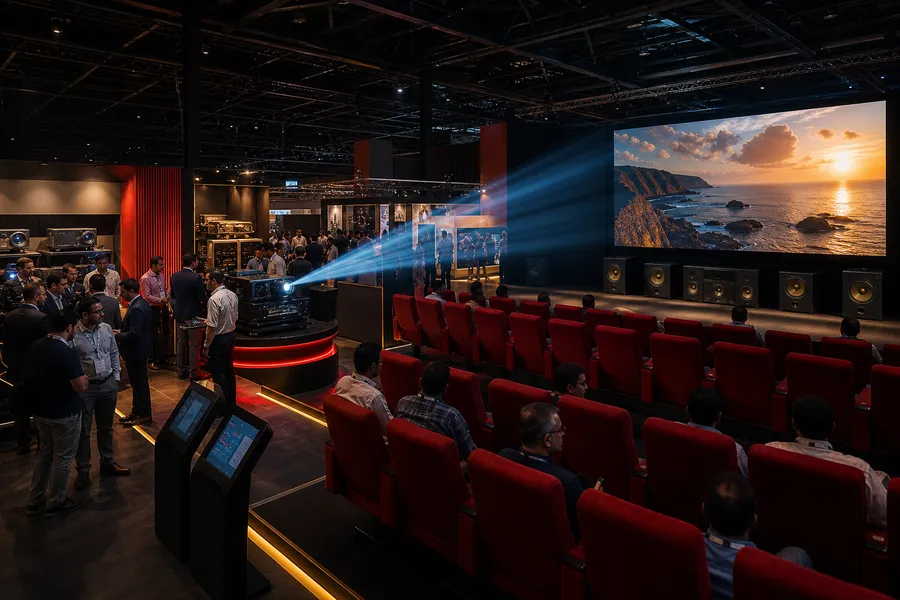
Big Cine Expo 2026 will be held at Chennai Trade Centre on Tuesday, 18 August, and Wednesday, 19 August 2026. The ninth edition combines an international trade show with a professional convention for multiplexes, single-screen cinemas, theatrical distribution, malls and businesses that supply the cinema-exhibition industry.
This is not a movie fan convention and it is not a public film festival. Its value comes from projection, sound, screens, seating, ticketing, concessions, acoustics, automation and operating conversations. Theatre owners and technical buyers should arrive with venue data and decision questions, not only curiosity.
Big Cine Expo 2026 Details
| Detail | Information |
|---|---|
| Dates | 18 and 19 August 2026 |
| Venue | Chennai Trade Centre, Nandambakkam |
| Edition | 9th |
| Format | Cinema exhibition trade show and convention |
| Audience | Theatre owners, operators, distributors, technicians, consultants and suppliers |
| Registration | Through the official Big Cine Expo website |
Use the current official page for daily timings, conference access and badge rules. Search engines may surface schedules from older editions, so do not copy a historic agenda into your 2026 plan.
What Is Big Cine Expo?
Big Cine Expo is a business platform for the part of cinema that audiences rarely see: the technology, design and operations between a film distributor and a paying viewer’s experience.
A theatre depends on many linked systems. Projection must match screen and room geometry. Sound needs correct design, installation and calibration. Seating affects sightlines, capacity and cleaning. Ticketing must connect to pricing and reporting. Concessions need speed, food safety and inventory control. Even a visually impressive lobby can fail if queue flow is poor.
The expo brings those decision areas into one place. Its official 2026 brochure lists audience groups such as theatre owners, senior management, contractors, AV installers, projectionists, sound specialists, consultants, mall operators and distributors.
Who Should Attend?
The event is relevant to:
- Multiplex and single-screen owners
- Cinema operations and technical heads
- Film distributors and theatrical-booking teams
- Mall developers and commercial-property managers
- Architects, acousticians and cinema consultants
- Projection, sound and AV professionals
- Seating, interiors and accessibility teams
- Ticketing, software and automation companies
- Food and beverage operators
- Investors evaluating new or renovated screens
A film student may learn about the exhibition business, but this is not designed as a filmmaking workshop. An actor looking for casting opportunities will find the wrong audience.
What Products And Systems Can You Compare?
The brochure covers categories across the cinema journey, including:
- Digital cinema projectors and projection accessories
- Cinema servers, content systems and automation
- Sound processors, amplifiers and loudspeakers
- Screens, masking and 3D systems
- Premium formats and immersive experiences
- Standard, recliner and specialist seating
- Ticketing, point-of-sale and management software
- Access control and self-service systems
- Concession equipment, packaging and food products
- Acoustic treatment and interior materials
- Lighting, signage and lobby displays
- Cleaning, maintenance and safety solutions
The exact exhibitor list matters. Shortlist vendors only after the official 2026 directory is available.
How Should Theatre Owners Prepare?
Bring facts about the property. A useful project sheet includes:
- Number of screens and seats
- Room dimensions and throw distance
- Current projector, server and sound system
- Average and peak occupancy
- Existing electrical and cooling capacity
- Planned renovation or opening date
- City tier and audience-price positioning
- Accessibility gaps
- Service problems and downtime history
For a renovation, list what must remain. Replacing one system can expose compatibility problems elsewhere. For a new cinema, bring drawings that can be shared safely and identify decisions that are still open.
Split your team by technical, commercial and operations questions. Regroup after each major category so that one person does not agree to a feature another team must maintain.
What Should You Ask Projection Vendors?
Do not begin with brightness alone. Ask how performance is calculated for your actual screen size, gain, throw, 2D and 3D use, and ambient conditions.
Questions should cover:
- Light source and expected usable life
- Brightness at the screen over time
- Resolution, contrast and colour capability
- Lens and throw requirements
- Heat, exhaust and cooling load
- Power consumption in normal operation
- Maintenance intervals and local support
- Server and automation compatibility
- Warranty exclusions and replacement lead time
A demo booth is not your auditorium. Request a site survey and a written calculation before purchase.
How Should You Evaluate Cinema Sound?
Sound quality cannot be selected from a specification sheet or a loud demonstration. Room volume, speaker placement, acoustic treatment and calibration all matter.
Ask whether the vendor designs complete systems or only supplies hardware. Request reference installations with rooms similar to yours. Discuss coverage consistency, bass control, amplifier headroom, monitoring, redundancy and technician training.
If immersive sound is proposed, calculate content availability, licensing, installation, extra speakers, maintenance and the premium your market can support. A format badge has value only when the system is correctly designed and consistently operated.
What Matters In Cinema Seating?
Sit in every sample. Test entry and exit, armrests, cup holders, sightline height, cleaning access and moving parts. A luxurious recliner that reduces capacity heavily or fails under high turnover may not suit every screen.
Ask about:
- Fire and material compliance
- Seat width, pitch and row geometry
- Accessibility and companion seating
- Motor warranty and spare parts
- Upholstery replacement
- Cleaning under and between seats
- Delivery, installation and floor fixing
- Local maintenance response
Use total seats sold per show, not only comfort, when modelling return. Premium seating may justify higher price in one auditorium and damage economics in another.
How Can Concession Teams Use The Expo?
Focus on queue time, consistency, food safety and margin. Equipment should match expected peak transactions, not average hourly sales.
Watch how long a machine takes to start, recover and clean. Ask about power, ventilation, consumables and operator training. For packaging, consider noise in the auditorium, spill risk and waste handling.
Point-of-sale integration matters. A fast counter still creates reconciliation problems if offers, inventory and ticket bundles do not flow into the same reporting system.
What Should You Learn At The Convention?
The convention can provide market context that a product booth cannot. Topics may cover audience behaviour, content, premium formats, single-screen renewal, distribution, technology and revenue. Use the official 2026 agenda once published.
Choose sessions connected to current decisions. Take notes on evidence and examples rather than inspirational phrases. Ask one concise question when invited and continue vendor-specific discussions outside the session.
Do not repeat an old schedule found in search results. Speakers and times change every edition.
How Do You Plan Two Days?
Use day one for discovery, scheduled technical meetings and high-priority convention sessions. Use the evening to reduce suppliers to a shortlist. Return on day two for detailed comparisons, commercial questions and follow-up demonstrations.
A practical sequence is:
- Opening hour: Rapid orientation and hall map
- Morning: Projection, sound and server meetings
- Midday: Selected convention session
- Afternoon: Seating, interiors, ticketing and concessions
- End of day: Team debrief and missing-question list
- Day two: Shortlisted vendors, references, quotations and partner meetings
Leave space for unexpected products. Do not let discovery replace mandatory meetings.
What Questions Reveal A Reliable Supplier?
Ask where support engineers are based, how many trained people cover South India, what spare parts are stocked, and what happens on a Friday-night failure.
Request:
- Named reference cinemas
- Written scope and exclusions
- Installation and commissioning plan
- Staff training detail
- Preventive-maintenance schedule
- Escalation path
- Warranty and response commitments
- Upgrade and end-of-life policy
Contact references independently. Ask operators about downtime and service, not only picture or sound quality on opening day.
How Do You Reach Chennai Trade Centre?
The venue is in Nandambakkam near Mount Poonamallee Road, with access influenced by Guindy, Kathipara and Ramapuram traffic.
Metro And Last Mile
There is no Metro station within the complex. Use a convenient station for your origin, then complete the trip by cab or auto-rickshaw. Build a buffer for the final road segment.
Bus
MTC routes serve the surrounding corridor. Check current service rather than relying on an old route number. Our Chennai bus routes guide helps with connection planning.
Car Or Cab
Confirm the hall and gate in your registration message. Morning business traffic can be slow. Parking is managed by venue and event conditions, so arrive early and follow staff direction.
At closing, cab demand rises. Use designated pickup zones and avoid stopping on the main approach road.
What Should You Carry?
- Badge confirmation and business identification
- Project sheet and non-confidential drawings
- Tape measure or digital measuring tool if relevant
- Notebook, phone and power bank
- Headphones or ear protection for repeated loud demos
- Comfortable footwear
- Business cards or contact QR
- A comparison form shared by the team
Photograph booth names with every product image, after getting permission. Otherwise, identical seats and black equipment racks become impossible to identify later.
What Mistakes Should You Avoid?
Do not select sound by loudness. Do not select projection by the brightest booth image. Do not select seating after sitting for thirty seconds. Do not sign a major order without a site survey and references.
Do not ignore accessibility, cleaning and staff workflow. Audience experience includes entry, toilets, temperature, queues and safe exit, not only the screen.
Do not collect vendor promises verbally. Convert shortlisted discussions into written technical and commercial submissions after the show.
How Should A Single-Screen Owner Prioritize Investment?
Start with failures audiences can already feel: weak picture, uneven sound, uncomfortable temperature, poor seats, slow ticketing or unreliable projection. Fixing the basic experience usually creates more value than adding a premium label to a room with unresolved problems.
Sequence work so that one upgrade does not need to be removed for the next. Acoustic treatment, cabling, screen, projection, speakers, seating and interiors affect each other. Ask a cinema consultant or integrated team to review the complete room before ordering isolated equipment.
Keep a portion of the budget for commissioning, calibration, staff training and opening-week faults. The equipment invoice is not the finished auditorium. Track audience feedback after reopening and correct repeat problems quickly.
Is Big Cine Expo Worth Attending?
For cinema owners, operators and serious industry suppliers, yes. Two focused days can reduce fragmented vendor research and expose how decisions in one category affect another.
The show is less useful for general film fans. It does not promise celebrity appearances, screenings or filmmaking instruction. Its value is commercial and operational.
Our honest verdict: attend if you are planning, upgrading or supplying a cinema. Carry room and business data, question local service rigorously and use day two to challenge the claims that impressed you on day one.
Frequently Asked Questions
When Is Big Cine Expo 2026?
The Chennai edition is scheduled for 18 and 19 August 2026.
Where Is It Held?
It will take place at Chennai Trade Centre in Nandambakkam.
Is Big Cine Expo A Film Festival?
No. It is a trade show and convention for cinema exhibition, technology, operations and theatrical business.
Who Should Register?
The core audience includes theatre owners, operators, distributors, mall teams, consultants, architects, technicians and cinema-industry suppliers.
What Products Are Shown?
Categories include projection, sound, servers, screens, seating, ticketing, automation, concessions, interiors and acoustics. Check the 2026 exhibitor directory for exact brands.
Are Conference Sessions Included?
Access rules can vary by registration type. Review the official 2026 agenda and badge terms when published.
How Much Time Should A Buyer Allow?
One full day can cover a narrow project. Two days are better for discovery followed by detailed comparison and commercial follow-up.
Where Can I Find Other Chennai Exhibitions?
Use the Chennai events page for verified trade events and public programs. Confirm all travel-critical details with the organizer.
Last fact-check: 16 July 2026. Timings, speakers, exhibitors, badge rules and hall access can change. The official Big Cine Expo website is the final authority.
Event Locations