Kalashraya Festival Chennai 2026: Two-Day Event Guide
📋 On this page +
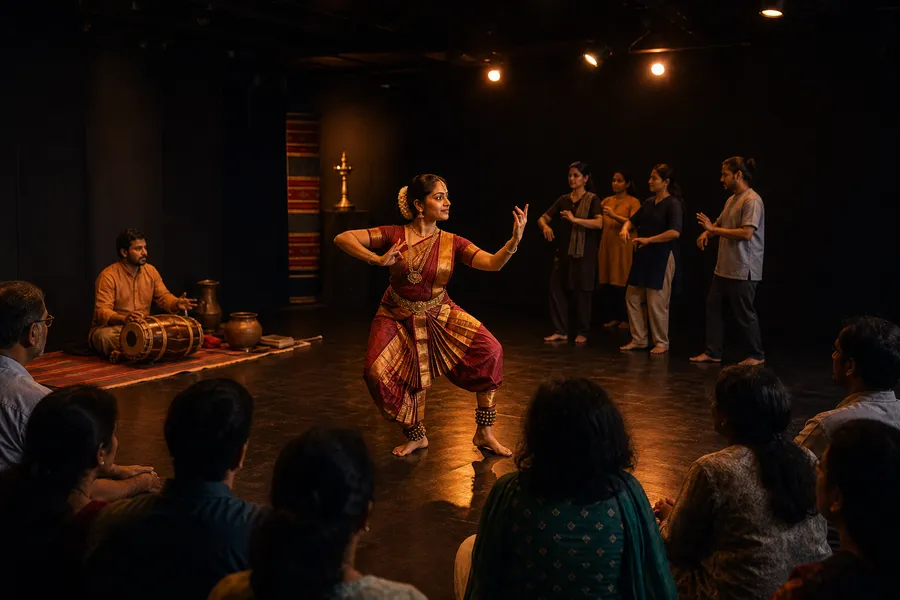
Kalashraya Festival Chennai will take place on Saturday, 1 August, and Sunday, 2 August 2026, at Kalashraya Spaces in West CIT Nagar. The two-day program combines Bharatanatyam by emerging dancers, namasankirtanam, a rhythm-focused talk and demonstration, and a physical-theatre movement workshop.
This is a small, curated performing-arts festival rather than a single headline show. The best ticket strategy depends on what you want: watching new classical dancers, learning how jathis relate to the dancing body, experiencing devotional music, or participating in movement work.
Kalashraya Festival 2026 Details
| Detail | Information |
|---|---|
| Dates | 1 and 2 August 2026 |
| Venue | Kalashraya Spaces, West CIT Nagar |
| Address | 18/31 East Road, West CIT Nagar, Chennai 600035 |
| Program | Bharatanatyam, namasankirtanam, talk-demonstration and movement workshop |
| Tickets | Official Kalashraya Festival page |
| Ticket policy | Each attendee needs a ticket; no cancellations or refunds stated |
Detailed session times and live prices were not exposed in the accessible source during research. Use the official page for the current schedule and payment amount. Do not plan around a reposted poster without confirming it against the ticket page.
What Is Kalashraya Festival?
Kalashraya Festival is a curated platform for performing arts. Its official event description connects the initiative to dancer Dr Janaki Rangarajan and says it began in 2013 with the aim of presenting both established and upcoming artists.
That curatorial purpose shapes the experience. A large sabha season may offer dozens of performances where audiences select familiar names. Kalashraya creates a tighter frame in which an emerging performer is not simply an early slot before the main act. The audience is invited to pay attention to development, interpretation and artistic voice.
The 2026 Chennai program also crosses performance and learning. Dance appears beside devotional singing, discussion of rhythm and a movement workshop. That makes the festival useful for dancers and teachers, but it is not only for insiders. A curious listener can attend one session without knowing technical vocabulary.
What Is In The 2026 Program?
The official event listing presents several distinct components across the weekend.
Emerging Bharatanatyam Performers
Both days include Bharatanatyam presentations by groups of upcoming dancers. This is the core discovery element of the festival. Expect different bodies, training lineages, choices of repertoire and levels of stage maturity rather than one continuous production.
For students, the value lies in comparison without turning the evening into a competition. Watch how each dancer enters, holds stillness, shapes a line, relates to rhythm and communicates a lyric. For general audiences, treat each presentation as a complete artistic proposition. An unfamiliar name is not an incomplete experience.
Namasankirtanam By Sweta Balasubramanian
The second day includes namasankirtanam by Vidushi Sweta Balasubramanian. This devotional-singing component broadens the weekend beyond dance and gives listeners a different relationship with rhythm, text and shared participation.
You do not need to know every composition. Follow the musical arc, repeated names and changes in intensity. If audience participation is invited, follow the artist’s lead instead of turning it into private conversation.
The Poetry In Rhythm: Jathis For The Dancing Body
Swamimalai Dr K. Suresh is listed for a talk and demonstration titled “The Poetry in Rhythm: Jathis for the Dancing Body.” This is likely to be the most directly educational session for dance students, teachers and rhythm-curious audiences.
The title points toward a useful question: how does a rhythmic sequence become embodied rather than merely counted? A good talk-demonstration can reveal the relationship between spoken syllable, structure, weight, attack, pause and movement. Bring a notebook, but do not spend the entire demonstration looking down.
Primal Instinct Movement Workshop
Shakthi Ramani’s “Primal Instinct” is presented as a physical-theatre movement workshop. This is participatory, not a seated performance. Workshop requirements may include suitable clothing, physical readiness, punctuality and an age or experience condition.
Read the session description before buying. Contact the organizer if you have an injury, mobility limitation or uncertainty about intensity. A movement workshop can often be adapted, but the facilitator needs honest information.
Which Ticket Should You Buy?
Choose a ticket after deciding whether you want breadth or depth.
Buy a full-festival or multi-session option, if offered, when you want to see how the curatorial idea develops across performance, music and learning. Choose individual sessions if time is limited or one part clearly matches your interest.
For a Bharatanatyam student, the talk-demonstration plus at least one emerging-dancer program makes a meaningful pairing. For a general arts visitor, a performance block may be the easiest entry. For an actor, contemporary dancer or theatre practitioner, the physical-theatre workshop may be the most directly relevant.
The organizer states that every attendee needs a ticket and that tickets are not cancellable or refundable. Confirm your schedule before paying. Do not buy a workshop ticket for a companion who expects to watch from the side unless observer access is explicitly allowed.
Is The Festival Suitable For Beginners?
Yes. Its smaller format can be less intimidating than a formal season calendar, provided you arrive curious rather than expecting a commercial stage spectacle.
Beginners should not worry about identifying every adavu, tala or compositional form. Start with visible questions:
- Where does the performer direct attention?
- How does movement change when the rhythm changes?
- What happens in stillness?
- How are face, hands and torso coordinated?
- When does the audience respond?
The talk-demonstration is especially useful because it can supply language for things you already notice. The workshop offers another route: understanding movement by doing rather than only watching.
How Should Dance Students Use The Weekend?
Do not attend only to copy choreography. Use the festival to refine observation.
Before each performance, put away assumptions about school or style. After it ends, write three specific notes: one choice that worked, one question and one moment you remember. Avoid vague judgments such as “good expressions” or “strong technique.”
During the jathi session, listen to how rhythmic clarity is explained. Ask a concise question only when invited. During the workshop, follow instructions fully instead of trying to make every exercise look like Bharatanatyam.
Students should also observe professional conduct: punctuality, quiet entry, respectful applause and not filming without permission. These habits matter as much as technical vocabulary.
What Should Workshop Participants Wear?
Wear movement-friendly clothing that allows bending, floor work and a full range of motion. Avoid restrictive jeans, heavy jewellery, loose accessories and anything you constantly need to adjust.
Carry water, a small towel and any essential support item permitted by the facilitator. Eat lightly beforehand. Arrive early enough to complete registration and settle before warm-up.
Tell the facilitator about injuries or medical concerns. Do not push through sharp pain to prove commitment. A workshop is a space for exploration, not an audition unless the organizer explicitly says otherwise.
How Do You Reach Kalashraya Spaces?
Kalashraya Spaces is at 18/31 East Road in West CIT Nagar, Chennai 600035. Save the full address and ticket contact because small arts venues can be easier to miss than large auditoriums.
By Metro
Nandanam Metro is a useful reference station for West CIT Nagar. The final stretch is best completed by auto-rickshaw or cab, especially in rain or after dark. Confirm that the driver is heading to East Road in West CIT Nagar, not another similarly named location.
By Bus
Bus access depends on your origin and the practical walking route from nearby main roads. Use a live MTC planner on the day. Our Chennai bus routes guide can help visitors who are not familiar with transfers.
By Cab Or Auto
Share the full address rather than only “Kalashraya.” Ask to be dropped without blocking residential gates. At the end, request pickup from a safe, lit point and keep noise low in the neighbourhood.
By Car
Do not assume dedicated parking at an intimate arts space. Ask the organizer about parking before driving. If street parking is permitted, follow local signs and do not obstruct homes or narrow turns. Public transport plus a short last-mile ride is usually simpler.
When Should You Arrive?
Reach at least 25 to 30 minutes before your first ticketed session. Workshop participants should allow more time if the organizer requests check-in or changing.
Small venues can have limited lobby space, and late movement is more visible than in a thousand-seat hall. If doors close after the start, staff may hold entry until a suitable break.
Check whether one ticket covers multiple consecutive programs. If switching from a workshop to a performance, leave time to cool down, change if needed and eat.
What Is The Venue Experience Likely To Be?
An intimate performance space reduces the distance between artist and audience. Facial detail, footwork and breath become more apparent. It also means audience behaviour is more apparent to the artist.
Keep phones silent and screens dark. Avoid whispering explanations through a full item. If you need to leave, wait for a transition. Photography and recording require explicit permission.
Seating may not offer the tiered sightlines of a large auditorium. Arrive early, choose responsibly and do not block shorter viewers with raised devices.
Can You Bring Children?
Check the ticket page for session-specific age rules. A quiet performance can suit an attentive older child, while a physical workshop may have its own minimum age or participation expectations.
Explain that the venue is small and that talking carries. Choose an aisle or exit-accessible position if the child may need a break. Do not provide noisy packaged snacks during a performance.
For children already learning dance or music, the festival can be particularly valuable because they see emerging artists closer to their own stage of development, not only senior stars.
Where Should You Eat?
West CIT Nagar, Nandanam, T Nagar and Saidapet provide many food options. Choose based on the gap between sessions. A quick tiffin is safer than a long restaurant meal when you have a fixed entry time.
Workshop participants should avoid a heavy meal immediately before movement. Carry a small approved snack for a long day, but eat only where the venue permits it. Do not bring food into the performance area.
How Can You Build A Two-Day Plan?
If you want the full festival, avoid treating every gap as dead time. Use breaks for food, notes and rest rather than crossing the city.
A sensible structure is:
- Day one: Arrive early, attend the emerging-dancer program and learn the venue rhythm.
- Day two morning or afternoon: Participate in the workshop or attend the talk-demonstration.
- Day two performance block: Hear the devotional program and watch the second set of dancers.
- Afterward: Write a short reflection while details remain fresh.
The official sequence may differ, so build this around the published schedule rather than assuming the order above.
Is Kalashraya Festival Worth Attending?
Yes, especially for people who value close observation and artistic process over celebrity scale.
The program’s strength is variety with a coherent purpose. Bharatanatyam, namasankirtanam, rhythm and physical theatre are not random attractions when placed around the performing body, tradition and new voices. The intimate venue can make each session feel direct.
The limitations are equally clear. Detailed times and prices must be checked on the live ticket page. Tickets are stated to be non-refundable. Parking may be limited. A workshop requires participation and is not interchangeable with watching a show.
Our honest verdict: this is one of the more interesting small-format Chennai arts weekends for students, practitioners and open-minded audiences. Choose sessions intentionally and give unfamiliar artists your full attention.
Frequently Asked Questions
When Is Kalashraya Festival Chennai 2026?
It is scheduled for Saturday, 1 August, and Sunday, 2 August 2026.
Where Is The Festival?
Kalashraya Spaces is at 18/31 East Road, West CIT Nagar, Chennai 600035.
What Events Are Included?
The listed program includes emerging Bharatanatyam performers, namasankirtanam by Sweta Balasubramanian, a jathi talk-demonstration by Swamimalai Dr K. Suresh and a physical-theatre movement workshop by Shakthi Ramani.
Are Ticket Prices Available?
Use the official ticket page for live prices. The accessible event source did not expose reliable price and detailed time information during research.
Are Tickets Refundable?
The organizer’s listed terms state no cancellations or refunds. Read the final conditions before payment.
Can Beginners Attend?
Yes. Choose a performance or talk-demonstration if you want a low-pressure entry. Read participation requirements before choosing the workshop.
What Is The Nearest Metro Station?
Nandanam Metro is a practical reference point, followed by a short auto-rickshaw or cab ride to West CIT Nagar.
Is Parking Available?
Dedicated parking was not confirmed in the source checked. Ask the organizer and avoid assuming street space will be available.
Where Can I Find More Chennai Cultural Events?
Browse the Chennai events calendar and our wider Chennai history guide for city context. Always verify event details on the official page before travelling.
Last fact-check: 16 July 2026. Session times, artist order, participation rules and ticket availability can change. Follow the official Kalashraya Festival page.
Event Locations